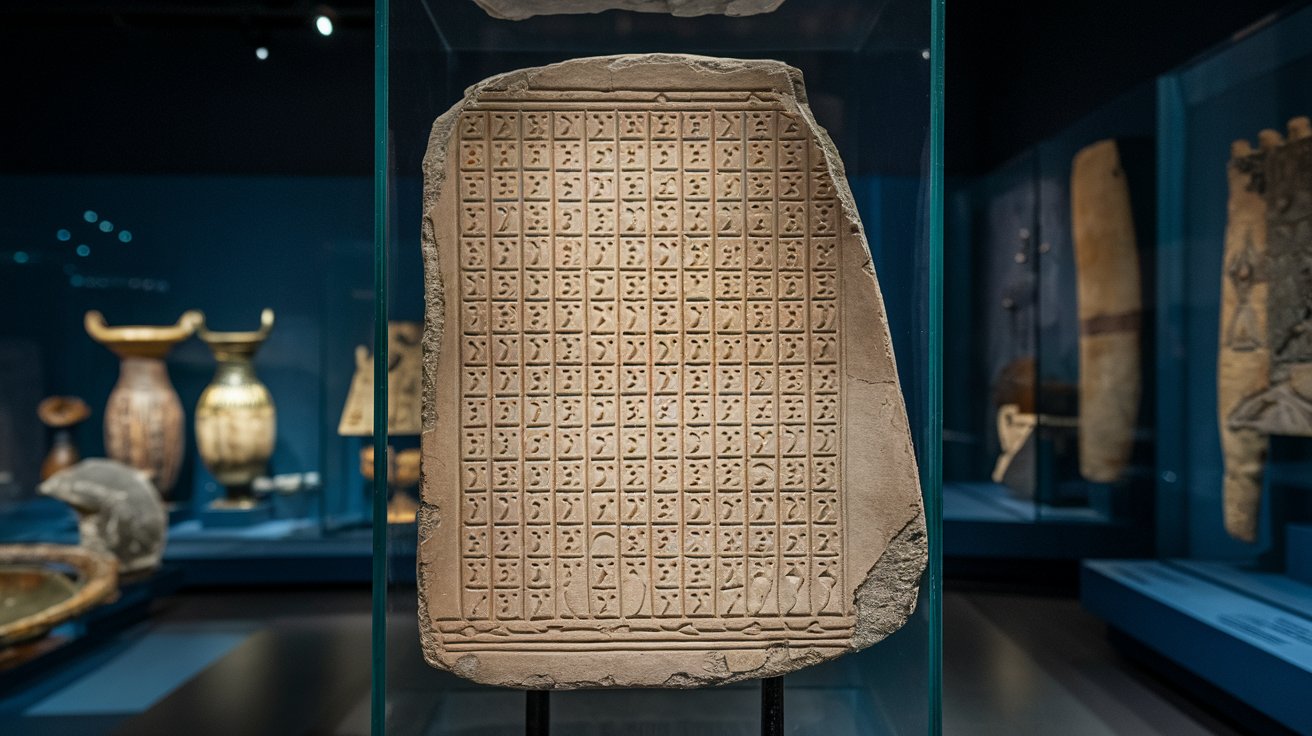
The cuneiform alphabet represents humanity’s earliest known writing system, developed over 5,000 years ago in ancient Mesopotamia. This wedge-shaped script revolutionized human communication and laid the foundation for all modern alphabets. Today, in 2026, approximately 2,400 American universities and institutions actively study cuneiform, with digital archives containing over 500,000 deciphered tablets accessible to researchers and enthusiasts nationwide.
Understanding the Cuneiform Writing System
The cuneiform alphabet originated around 3400 BCE in ancient Sumer, located in present-day Iraq. Unlike modern alphabets with fixed letter representations, cuneiform evolved from pictographic symbols into a sophisticated system combining logograms and syllabic characters. The term cuneiform derives from the Latin cuneus, meaning wedge, describing the distinctive wedge-shaped impressions created by pressing a reed stylus into soft clay tablets. This writing system served multiple civilizations, including the Sumerians, Akkadians, Babylonians, and Assyrians, spanning over 3,000 years of continuous use.
By 2026, advanced imaging technologies have revealed that the cuneiform script contains approximately 600 to 1,000 distinct signs, depending on the historical period and region. Early cuneiform was primarily logographic, with each symbol representing a complete word or concept. Over centuries, scribes developed phonetic elements, allowing the system to represent sounds and syllables, making it more versatile for recording different languages. The Sumerian cuneiform eventually adapted to write Akkadian, Hittite, Elamite, and other ancient languages, demonstrating remarkable flexibility that modern linguists continue to study.
The Historical Development of Cuneiform Script
The evolution of cuneiform writing occurred in distinct phases over three millennia. During the Proto-Cuneiform period (3400-3000 BCE), scribes used approximately 1,000 pictographic symbols primarily for accounting and administrative purposes in Mesopotamian temples and palaces. These early symbols directly depicted objects like grain, livestock, and commodities. Archaeological evidence from 2026 excavations in southern Iraq confirms that this initial phase focused exclusively on economic record-keeping rather than literary or narrative texts.
The Early Dynastic period (2900-2350 BCE) witnessed the transformation from pictographs to abstract wedge-shaped characters. Scribes rotated symbols 90 degrees and simplified their shapes for faster writing, fundamentally changing the visual appearance of the script. This period introduced phonetic complements and grammatical markers, enabling the recording of names, verbs, and complete sentences. Research published in 2026 by the American Oriental Society indicates that literacy rates among Mesopotamian elites reached approximately 1-2% during this era, with specialized scribal schools training students for 10-12 years in the complex cuneiform system.
Major Civilizations That Used Cuneiform
The Sumerian civilization pioneered cuneiform writing and used it for religious texts, legal codes, mathematical calculations, and literary works including the famous Epic of Gilgamesh. Sumerian cuneiform remained influential even after the Sumerian language ceased being spoken around 2000 BCE, continuing as a scholarly and liturgical language similar to Latin in medieval Europe. Modern translations available in 2026 reveal that Sumerian texts covered diverse topics from astronomy to medical prescriptions, demonstrating the versatility of cuneiform as a comprehensive communication tool.
Akkadian speakers adopted and modified cuneiform characters around 2500 BCE, creating the most widely used version of the script throughout ancient Mesopotamia. The Akkadian cuneiform system streamlined the symbol inventory to approximately 600 signs and introduced standardized syllabic values. The Old Babylonian period (2000-1600 BCE) represents the classical phase of cuneiform literacy, producing legal documents like Hammurabi’s Code, diplomatic correspondence known as the Amarna Letters, and extensive literary compositions. Current digital databases maintained by American institutions contain over 130,000 Akkadian cuneiform texts, with new discoveries added quarterly in 2026.
The Decline and Rediscovery Process
The use of cuneiform script gradually declined after the conquests of Alexander the Great in 331 BCE, as Aramaic and Greek alphabets became dominant in the Near East. The last known cuneiform text dates to 75 CE, a astronomical diary written in Babylon. For over 1,700 years, the ability to read cuneiform was completely lost, and the thousands of clay tablets buried across Mesopotamia became indecipherable artifacts. The rediscovery process began in the 17th century when European travelers documented mysterious wedge-shaped inscriptions at Persepolis in Iran, sparking scholarly curiosity about these ancient writings.
The breakthrough in deciphering cuneiform occurred in 1835 when British officer Henry Rawlinson copied the trilingual Behistun Inscription in Persia, which contained the same text in Old Persian, Elamite, and Babylonian. By comparing the known Old Persian text with the unknown Babylonian version, scholars gradually unlocked the cuneiform alphabet system. George Smith’s 1872 discovery and translation of the Flood Tablet, containing a Mesopotamian flood story predating the Biblical account, captured international attention and accelerated cuneiform studies. Today in 2026, artificial intelligence and machine learning algorithms assist researchers in deciphering previously unreadable damaged tablets, with the University of Chicago’s digital cuneiform library processing over 15,000 new tablet images annually.
How the Cuneiform Alphabet Works
Understanding how cuneiform works requires recognizing its hybrid nature combining logograms, syllabograms, and determinatives. Logograms represent complete words or concepts with a single sign—for example, the symbol for sun could represent the word day, sun, or brightness depending on context. Syllabograms represent specific sounds or syllables, similar to how we use letters in English. A single cuneiform character might function as both a logogram and a syllabogram in different contexts, creating complexity that required extensive training for ancient scribes and modern scholars alike.
Determinatives constitute a unique feature of the cuneiform writing system, serving as unpronounced markers that clarify word categories. These signs indicated whether a word referred to a deity, place name, wooden object, stone item, or person, resolving ambiguities in the script. For instance, the same syllabic signs could spell different words, but determinatives specified the intended meaning. Modern cuneiform translators in 2026 use comprehensive sign lists and contextual analysis to accurately interpret these complex texts. The Pennsylvania Sumerian Dictionary project, updated through 2026, catalogs over 28,000 Sumerian words with their various cuneiform representations, providing essential resources for anyone learning to read cuneiform script.
Writing Materials and Techniques
Ancient scribes created cuneiform inscriptions primarily on clay tablets using reed styluses cut at angles to produce wedge-shaped impressions. The clay tablets ranged from palm-sized for simple receipts to massive multi-column tablets for literary epics and legal codes. Scribes prepared fresh clay to optimal moisture levels, impressed the text, and then allowed tablets to dry naturally or baked them for permanent records. Archaeological evidence from 2026 excavations reveals that Mesopotamian archives contained hundreds of thousands of tablets organized by subject matter, demonstrating sophisticated information management systems comparable to modern libraries.
For monumental inscriptions, artisans carved cuneiform characters into stone, metal, and other durable materials. The famous Law Code of Hammurabi, carved on a black basalt stele standing over seven feet tall, contains 282 laws written in elegant Babylonian cuneiform. Royal inscriptions on palace walls, boundary stones, and victory monuments proclaimed achievements and divine mandates using carefully executed wedge-shaped script. Modern experimental archaeology projects in American universities during 2026 have demonstrated that proficient scribes could write approximately 50-60 cuneiform signs per minute on clay, achieving impressive production rates for administrative documentation.
Reading Direction and Text Organization
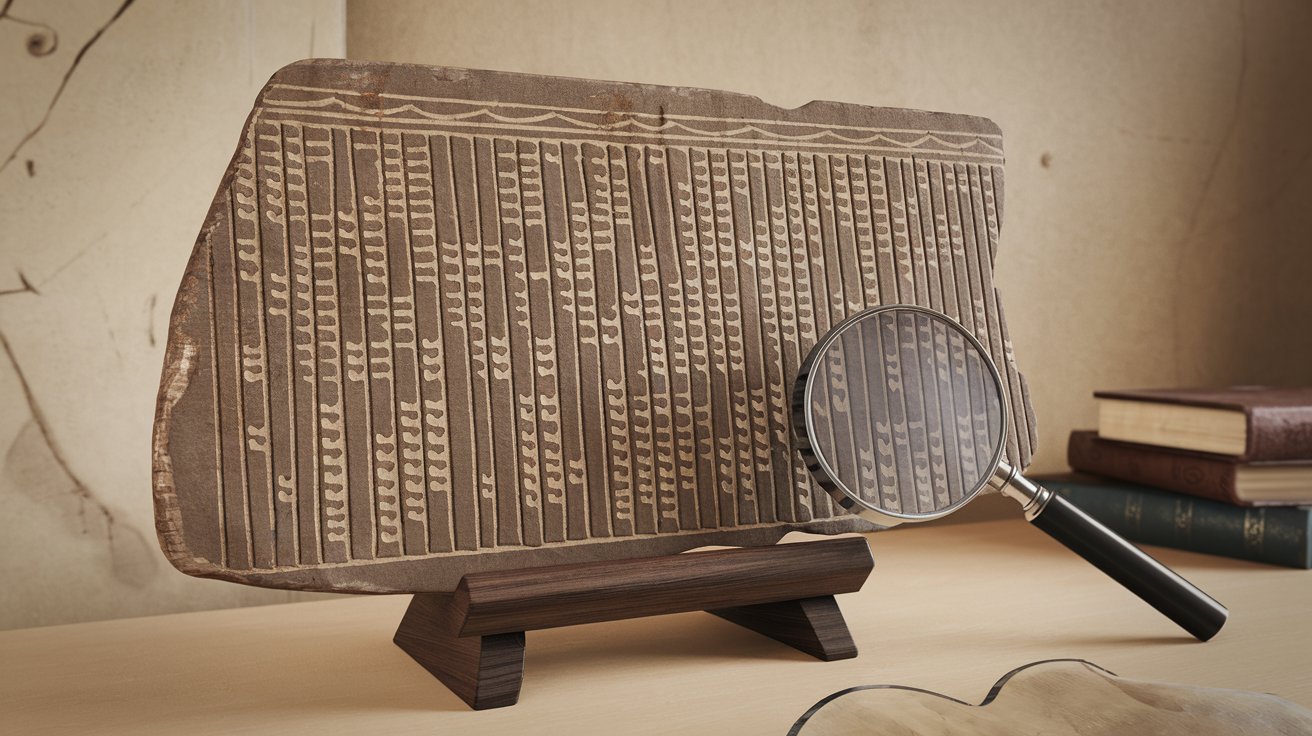
Early cuneiform texts from the Proto-Literate period arranged symbols in vertical columns read from top to bottom and right to left. However, during the Early Dynastic period around 2900 BCE, scribes rotated the entire writing system 90 degrees counterclockwise, establishing the horizontal left-to-right format that persisted throughout cuneiform’s history. This rotation fundamentally altered the orientation of individual signs, transforming vertical pictographs into horizontal wedge arrangements that defined the classical cuneiform appearance familiar to modern scholars.
The organization of cuneiform tablets followed standardized formats depending on text type. Administrative documents typically began with date formulas and concluded with witness lists and seal impressions. Literary works divided into columns, often with ruled lines separating sections. Multi-tablet series like the Epic of Gilgamesh included colophons identifying tablet numbers and ensuring proper sequence. Recent digital humanities projects in 2026 have mapped the physical organization of ancient libraries, revealing that Mesopotamian scholars catalogued texts using tags and labels, creating systematic archival methods that predate modern library science by thousands of years.
Cuneiform Versus Hieroglyphics: Key Differences
The question of differences between cuneiform and hieroglyphics frequently arises among students of ancient writing systems. While both represent early forms of written communication, they developed independently in different regions—cuneiform in Mesopotamia and hieroglyphics in Egypt—with distinct characteristics. Egyptian hieroglyphics maintained their pictorial quality throughout their history, with recognizable images of birds, humans, and objects, whereas cuneiform evolved into abstract wedge combinations that no longer resembled original pictographs. This fundamental difference in visual presentation reflects different technological approaches: Egyptian scribes painted or carved detailed images, while Mesopotamian scribes impressed standardized wedge shapes into clay.
Structurally, hieroglyphic writing combined logograms, phonetic symbols, and determinatives similar to cuneiform, but Egyptian script included a separate cursive form called hieratic for everyday use alongside formal hieroglyphics for monuments. Cuneiform served as both monumental and administrative script without developing a distinct cursive variant. The hieroglyphic system used approximately 700-800 signs during the Classical period, comparable to cuneiform’s inventory, but hieroglyphics could be written in multiple directions—left-to-right, right-to-left, or top-to-bottom—with symbols facing toward the text’s beginning. Cuneiform standardized on left-to-right horizontal writing by 2500 BCE. Comparative linguistics studies published in 2026 demonstrate that both systems required approximately 10-12 years of training for full literacy, indicating similar educational investments across ancient civilizations.
Learning to Read Cuneiform Today
For those wondering how to learn cuneiform in 2026, numerous resources and educational pathways exist across American institutions. Over 85 universities in the United States offer courses in Akkadian, Sumerian, or general cuneiform studies through their Near Eastern Studies, Archaeology, or Linguistics departments. Introductory courses typically begin with learning the sign list, starting with approximately 100-150 common signs before expanding to the full repertoire. Students learn to recognize sign variations across different periods and scribal traditions, developing skills in reading cuneiform tablets through direct engagement with photographs and drawings of original texts.
Digital resources have revolutionized cuneiform education in recent years. The Cuneiform Digital Library Initiative (CDLI) provides free access to over 334,000 cuneiform text images with transliterations and translations, allowing self-directed learners to study authentic materials. Interactive apps and online courses offered by institutions like Yale University and UCLA enable students nationwide to practice sign recognition and translation exercises. The Open Richly Annotated Cuneiform Corpus (ORACC) project offers comprehensive grammatical tools and searchable text databases. By 2026, virtual reality applications allow students to handle 3D models of cuneiform tablets, rotating and examining texts exactly as ancient scribes created them, enhancing the learning experience through immersive technology.
Essential Study Materials and Resources
Beginning students of cuneiform script require several fundamental references. John Huehnergard’s A Grammar of Akkadian serves as the standard textbook for learning Babylonian and Assyrian cuneiform, with systematic lessons building from basic signs to complex grammatical structures. For Sumerian, the most widely used introductory text is Marie-Louise Thomsen’s The Sumerian Language, which provides comprehensive grammatical explanations with practice exercises. Sign lists remain essential tools—René Labat’s Manuel d’Épigraphie Akkadienne catalogs sign forms across different periods, while digital sign lists with search functions are freely available through academic databases in 2026.
Obtaining cuneiform alphabet PDFs and transliteration charts helps learners memorize sign values and their various readings. Most university programs provide downloadable sign sheets showing each character’s common logographic meanings, syllabic values, and determinative uses. Practice involves copying signs repeatedly to develop recognition skills, similar to learning any new alphabet. Advanced students work with cuneiform dictionaries—the Chicago Assyrian Dictionary (CAD), completed in 2011 after 90 years of scholarship, comprises 21 volumes covering Akkadian vocabulary comprehensively. The Pennsylvania Sumerian Dictionary, accessible online in 2026, offers equivalent coverage for Sumerian. These resources enable serious students to progress from reading simple administrative texts to tackling complex literary and religious compositions.
Timeline for Achieving Reading Proficiency
Realistic expectations for learning cuneiform involve understanding the time commitment required. Students taking university courses typically achieve basic reading proficiency in simple texts after one academic year of intensive study, dedicating 8-12 hours weekly to memorizing signs, learning grammar, and practicing transliteration. This foundational level enables reading straightforward administrative documents, simple letters, and heavily annotated literary texts. Intermediate proficiency, allowing independent work with moderately difficult texts and use of dictionaries for unknown vocabulary, generally requires 2-3 years of consistent study.
Advanced reading skills sufficient for independent cuneiform research and contributing to scholarly discussions typically develop after 4-5 years of dedicated study, equivalent to completing a specialized graduate degree. Professional Assyriologists continue expanding their knowledge throughout their careers, as the vast corpus of cuneiform literature spans multiple languages, genres, and historical periods. However, motivated independent learners using online resources can achieve satisfying results more quickly by focusing on specific text types or periods. A 2026 survey of cuneiform students indicated that learners who practiced sign recognition for 30 minutes daily using digital flashcard systems progressed 40% faster than those relying solely on weekly class sessions, demonstrating the value of consistent engagement with the material.
Deciphering and Translating Cuneiform Texts
The process of deciphering cuneiform involves multiple analytical steps combining linguistic knowledge, historical context, and comparative methodology. Scholars first examine the physical tablet, documenting its condition, size, and format. High-resolution photography and 3D scanning technology used in 2026 captures fine details invisible to the naked eye, revealing faint impressions and damaged areas. Epigraphers create hand-copies—precise drawings of each sign—that standardize the appearance while preserving distinguishing features. These drawings facilitate comparison with known sign forms and enable researchers to propose readings for unclear or damaged sections.
Transliteration converts cuneiform signs into Roman alphabet equivalents, representing both logographic values (typically in capital letters) and syllabic readings (in lowercase). This intermediate step allows scholars unfamiliar with cuneiform to follow the argument and verify proposed readings. Translation then renders the ancient text into modern English or other contemporary languages, requiring deep understanding of grammar, vocabulary, and cultural context. Cuneiform translation remains challenging because many texts contain gaps, ambiguous signs, or vocabulary attested only in single contexts. Professional translators consult parallel texts, cognate languages, and contextual clues to propose interpretations, often indicating uncertainty with question marks or alternative readings. Machine learning algorithms developed through 2026 now assist by suggesting probable readings based on patterns in thousands of previously translated texts, though human expertise remains essential for accurate cuneiform interpretation.
Modern Technology in Cuneiform Studies
Technological advances have transformed cuneiform research dramatically over the past decade. Reflectance Transformation Imaging (RTI) uses multiple light angles to create interactive images where researchers can virtually adjust lighting to enhance illegible signs. This non-invasive technique has revealed previously unreadable text on thousands of tablets in American museum collections. Three-dimensional scanning produces precise digital models that preserve exact tablet dimensions and surface details, creating permanent records protecting against future deterioration while enabling worldwide access to fragile originals.
Artificial intelligence applications now support automatic cuneiform recognition, with neural networks trained to identify signs and propose readings. Research teams at MIT and Stanford University reported in 2026 that their AI systems achieve 85-92% accuracy on well-preserved texts, significantly accelerating the initial transcription phase. Natural language processing tools analyze grammatical patterns and suggest contextually appropriate vocabulary, helping scholars work more efficiently with the enormous cuneiform corpus. Despite these technological aids, human expertise remains irreplaceable for interpreting nuanced meanings, resolving ambiguities, and understanding cultural contexts that machines cannot fully grasp. The combination of advanced technology and traditional scholarship has enabled the translation of approximately 12,000-15,000 previously unpublished tablets annually in recent years, steadily expanding knowledge of ancient Mesopotamian civilization.
Cuneiform’s Cultural and Historical Significance
The cuneiform alphabet’s importance extends far beyond its role as the first writing system. This invention fundamentally transformed human society by enabling the reliable transmission of information across space and time. Written records allowed the development of complex administration, supporting the emergence of cities and states that managed thousands of inhabitants. Legal codes like Hammurabi’s Laws established written standards of justice that influenced subsequent legal traditions. Economic contracts, property deeds, and business correspondence created commercial systems that connected distant regions through trade networks, with cuneiform documents serving as legally binding evidence of transactions.
Culturally, cuneiform literature preserved humanity’s earliest recorded stories, religious beliefs, and philosophical reflections. The Epic of Gilgamesh, dating to approximately 2100 BCE, explores timeless themes of friendship, mortality, and the search for meaning, resonating with modern readers across four millennia. Sumerian and Akkadian myths recorded in cuneiform provided insights into ancient cosmology, explaining creation, divine relationships, and humanity’s place in the universe. Scientific texts demonstrate sophisticated mathematical knowledge, astronomical observations, and medical practices. A 2026 analysis of cuneiform medical texts revealed that Mesopotamian physicians documented over 500 different symptoms and 250 medicinal plants, establishing practices that influenced Greek and Roman medicine. The preservation of this knowledge in durable clay tablets has given modern scholars unprecedented access to ancient thought.
Cuneiform in American Museums and Collections
American institutions house extensive cuneiform collections totaling over 150,000 tablets and fragments. The University of Pennsylvania Museum of Archaeology and Anthropology holds approximately 40,000 cuneiform objects from excavations at Nippur, Ur, and other Mesopotamian sites, representing one of the world’s largest collections. The Yale Babylonian Collection contains roughly 45,000 tablets spanning all periods of cuneiform use, with particular strength in Old Babylonian mathematical and administrative texts. The Oriental Institute at the University of Chicago maintains about 30,000 cuneiform pieces, including important royal inscriptions and literary works.
These collections actively contribute to ongoing cuneiform research in 2026. Museums collaborate with university scholars to photograph, catalog, and publish their holdings through digital platforms, making texts accessible to global researchers. Public exhibitions introduce broader audiences to cuneiform writing, with interactive displays allowing visitors to impress their own clay tablets using replica styluses. Educational programs for K-12 students use cuneiform as an engaging introduction to ancient civilizations and the development of literacy. The Smithsonian Institution’s National Museum of Asian Art features rotating displays of cuneiform artifacts with accompanying educational materials explaining how the writing system functioned and its historical context. Virtual museum tours launched in 2026 enable anyone worldwide to explore these collections online, democratizing access to humanity’s earliest written heritage.
Practical Applications of Cuneiform Knowledge
Beyond academic interest, cuneiform expertise contributes to various practical fields in 2026. Museums and cultural heritage institutions employ cuneiform specialists for collection management, conservation, and public education. The antiquities market requires experts who can authenticate cuneiform tablets and identify looted objects for repatriation to Iraq and other source countries. Digital humanities projects employ programmers with cuneiform knowledge to develop specialized databases, search algorithms, and visualization tools for ancient texts.
The growing field of cultural heritage protection increasingly values cuneiform literacy. Archaeological sites in Iraq and Syria face ongoing threats from conflict and looting, requiring trained professionals who can document and preserve endangered materials. American government agencies, including the Department of State and Department of Defense, occasionally employ cultural heritage specialists with cuneiform expertise to advise on protecting archaeological sites in Middle Eastern operational areas. International organizations like UNESCO employ experts to assist with inventory, conservation, and repatriation of cuneiform artifacts. Publishing houses specializing in ancient Near Eastern studies need editors and translators capable of working with cuneiform sources. While the job market remains specialized, genuine expertise in cuneiform opens unique professional opportunities unavailable to those without this distinctive skill set.
Related video about spijkerschrift alfabet
This video complements the article information with a practical visual demonstration.
Important things to know about spijkerschrift alfabet
How does cuneiform writing actually work?
Cuneiform works as a complex writing system combining three types of signs: logograms representing complete words, syllabograms representing sounds or syllables, and determinatives that classify words without being pronounced. Ancient scribes pressed reed styluses into soft clay at various angles to create wedge-shaped impressions. A single cuneiform sign might have multiple readings depending on context—it could represent a complete word, a syllable, or serve as a grammatical marker. Determinatives helped clarify meaning by indicating whether a word referred to a deity, place, person, or object type. This hybrid system required extensive training, with scribal students spending 10-12 years mastering the approximately 600-1,000 signs used in classical periods.
Has cuneiform script been completely deciphered?
Yes, cuneiform has been deciphered for major languages including Sumerian, Akkadian, Hittite, and Old Persian. The breakthrough occurred in the 1830s-1850s when scholars used multilingual inscriptions to crack the code, similar to how the Rosetta Stone enabled hieroglyphic decipherment. Modern Assyriologists can read most cuneiform texts with high confidence, supported by comprehensive dictionaries and grammatical reference works. However, challenges remain with damaged tablets, rare vocabulary appearing in limited contexts, and lesser-known languages written in cuneiform. As of 2026, approximately 85-90% of the estimated 500,000+ surviving cuneiform texts have been catalogued, though many await detailed translation and publication, representing ongoing work for future generations of scholars.
What are the main differences between cuneiform and hieroglyphics?
The differences between cuneiform and hieroglyphics include their geographical origins, visual appearance, and writing materials. Cuneiform developed in Mesopotamia using wedge-shaped impressions on clay tablets, while hieroglyphics emerged in Egypt using pictorial symbols painted or carved on stone, papyrus, and other surfaces. Cuneiform evolved into abstract wedge combinations, losing pictorial quality, whereas hieroglyphics maintained recognizable images throughout their use. Structurally, both combined word-signs and sound-signs with determinatives, but hieroglyphics developed a separate cursive script (hieratic) for daily use, while cuneiform served both monumental and administrative purposes. Hieroglyphics could be written in multiple directions, while cuneiform standardized on left-to-right horizontal orientation. Both systems required similar education time—approximately 10-12 years for full literacy.
How can someone learn to read cuneiform today?
Learning cuneiform reading in 2026 involves multiple accessible pathways. Over 85 American universities offer courses in Akkadian, Sumerian, or cuneiform studies through Near Eastern departments. Digital resources provide self-study options, including the Cuneiform Digital Library Initiative with 334,000+ text images, online courses from Yale and UCLA, and interactive apps for sign memorization. Essential textbooks include Huehnergard’s A Grammar of Akkadian and Thomsen’s The Sumerian Language. Students typically achieve basic reading proficiency after one year of intensive study, intermediate level after 2-3 years, and advanced research capability after 4-5 years. Consistent daily practice using digital flashcards and working with authentic texts accelerates progress. Virtual reality applications now enable immersive practice with 3D tablet models, enhancing the learning experience.
Where can I find cuneiform alphabet charts and learning materials?
Comprehensive cuneiform alphabet PDFs and learning materials are freely available through multiple academic sources in 2026. The Cuneiform Digital Library Initiative (CDLI) offers downloadable sign lists showing character forms across different periods. University websites, particularly Yale, Pennsylvania, and Chicago, provide student resources including transliteration charts and practice exercises. René Labat’s sign manual remains the standard reference, with digital versions searchable by sign shape or reading. The Open Richly Annotated Cuneiform Corpus (ORACC) provides online grammatical tools and annotated texts. Interactive apps like ‘Cuneiform Revealed’ offer systematic sign introduction with memorization exercises. Most university cuneiform courses make their syllabi and handouts publicly available, providing structured learning pathways for independent students seeking quality educational materials.
What is the historical significance of cuneiform writing?
Cuneiform’s significance lies in its status as humanity’s first writing system, invented around 3400 BCE, which fundamentally transformed civilization by enabling reliable information transmission across time and space. This innovation supported the development of complex urban administration, legal systems like Hammurabi’s Code, extensive commercial networks, and the preservation of literature including the Epic of Gilgamesh. Cuneiform documented scientific knowledge in mathematics, astronomy, and medicine that influenced later Greek and Roman scholarship. The system’s adaptability allowed it to record multiple languages across over 3,000 years and vast geographical areas. The survival of hundreds of thousands of clay tablets provides modern scholars with unprecedented direct access to ancient Mesopotamian thought, culture, and daily life, making cuneiform invaluable for understanding the foundations of Western civilization.
| Key Aspect | Important Details | Significance |
|---|---|---|
| Origin & Timeline | Developed 3400 BCE in Sumer; used continuously for 3,000+ years until 75 CE | Humanity’s first writing system, foundation for all later alphabets |
| Writing System Type | Hybrid combining 600-1,000 logograms, syllabograms, and determinatives | Flexible system adapted for multiple languages and purposes |
| Physical Medium | Wedge impressions on clay tablets using reed stylus; also stone, metal | Exceptional preservation enabling 500,000+ surviving texts |
| Decipherment Status | Fully deciphered 1830s-1850s; comprehensive dictionaries available 2026 | Accessible to modern scholars with extensive reference materials |
| Learning Pathway | 85+ US universities offer courses; digital resources enable self-study | Achievable skill with 1-5 years study depending on proficiency goals |
| Modern Applications | Museum curation, digital humanities, cultural heritage protection | Specialized professional opportunities in academic and governmental fields |
| US Collections | 150,000+ tablets at Penn, Yale, Chicago, Smithsonian institutions | Extensive research materials accessible through museums and online |
| 2026 Technology | AI recognition 85-92% accurate; 3D scanning; VR learning applications | Accelerated research and democratized access to ancient texts |