
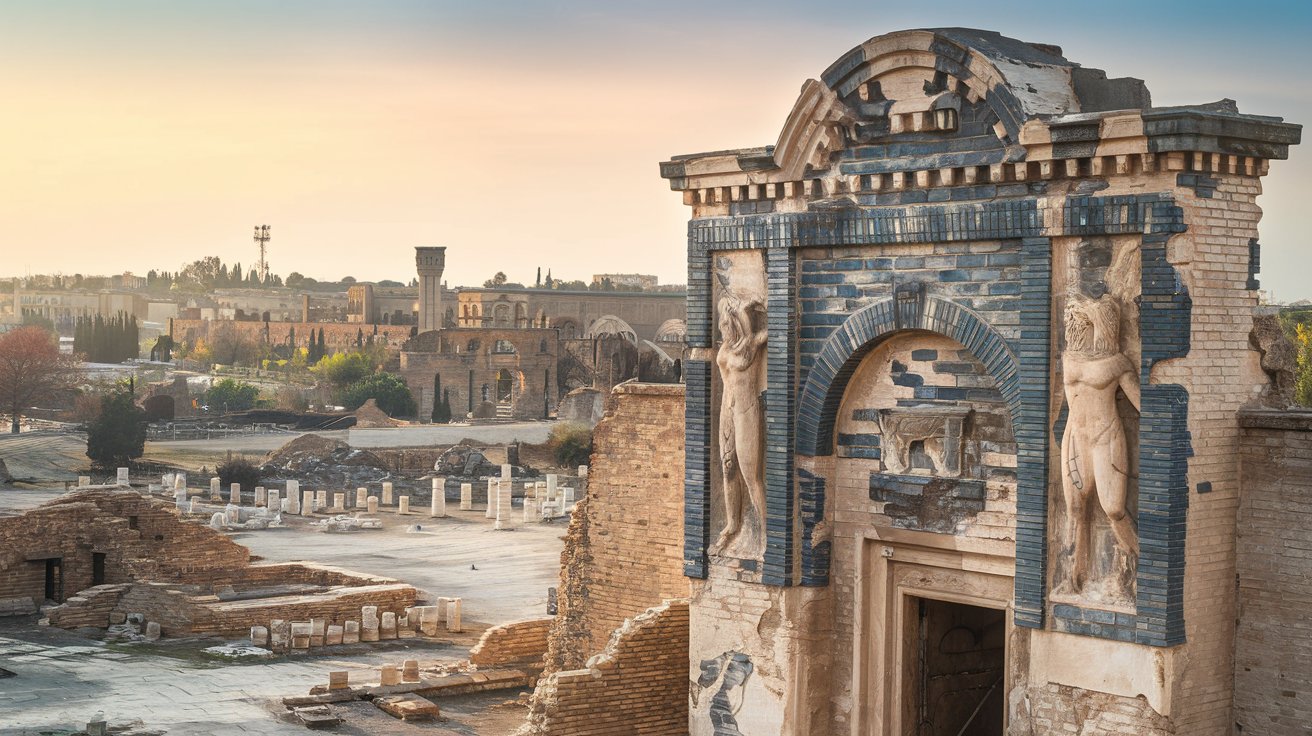
Nebuchadnezzar II stands as one of history’s most powerful and complex rulers, reigning over the Neo-Babylonian Empire from 605 to 562 BCE. As the King of Babylon, he transformed his city into the ancient world’s most magnificent metropolis, constructed the legendary Hanging Gardens, and played a pivotal role in biblical history through the destruction of Jerusalem and the Babylonian exile. His story intertwines military conquest, architectural grandeur, divine judgment, and ultimate humility, making him a fascinating figure for scholars, theologians, and history enthusiasts across the United States in 2026.
Who Was Nebuchadnezzar in the Bible
Nebuchadnezzar appears prominently throughout the Bible, particularly in the books of Daniel, Jeremiah, and 2 Kings, as both God’s instrument of judgment and a recipient of divine punishment. The biblical narrative portrays him as a powerful monarch whom God used to discipline the kingdom of Judah for their unfaithfulness. In 586 BCE, Nebuchadnezzar’s forces destroyed Jerusalem, demolished Solomon’s Temple, and carried the Jewish people into the Babylonian captivity that lasted seventy years.
The Book of Daniel provides the most detailed biblical account of Nebuchadnezzar’s character, describing his dreams, his pride, and his eventual transformation. Daniel served in his court as a trusted advisor and interpreter of dreams, providing insight into the king’s spiritual journey. The biblical portrayal emphasizes Nebuchadnezzar’s role in God’s sovereign plan, demonstrating how even the mightiest earthly ruler remains subject to divine authority. Modern biblical scholars in 2026 continue to analyze archaeological evidence that corroborates many details of his reign described in scripture.
Nebuchadnezzar as King of Babylon
Nebuchadnezzar II ascended to the throne in 605 BCE following his father Nabopolassar’s death, inheriting an empire that had recently overthrown Assyrian dominance. As King of Babylon, he embarked on an ambitious program of military expansion and urban development that would define his forty-three-year reign. His military campaigns extended Babylonian control throughout Mesopotamia, Syria, Phoenicia, and Judah, creating one of the ancient world’s most formidable empires.
Under his rule, Babylon became the ancient world’s most spectacular city, featuring massive walls, the famous Ishtar Gate adorned with blue glazed bricks, and the legendary Hanging Gardens considered one of the Seven Wonders of the Ancient World. Archaeological excavations conducted through 2026 have revealed the extraordinary scale of his building projects, including the Etemenanki ziggurat that may have inspired the biblical Tower of Babel story. His administrative reforms strengthened central authority, while his patronage of arts and sciences fostered a cultural renaissance that influenced civilizations for centuries.
Military Campaigns and Conquests
Nebuchadnezzar’s military achievements secured Babylon’s dominance throughout the Near East, with his most significant victory occurring at the Battle of Carchemish in 605 BCE, where he defeated the Egyptian forces and established Babylonian control over Syria and Palestine. His subsequent campaigns subdued rebellious territories, with Jerusalem falling to his armies three times between 605 and 586 BCE. The siege of Tyre lasted thirteen years, demonstrating his tactical patience and strategic determination.
Military records from the Babylonian Chronicles document his systematic approach to conquest, combining overwhelming force with psychological warfare. His armies employed advanced siege technologies, including battering rams, siege towers, and extensive earthworks that made his forces nearly unstoppable. The destruction of Jerusalem in 586 BCE represented the culmination of his western campaigns, fundamentally altering the religious and cultural landscape of the ancient Near East. Modern military historians studying his campaigns in 2026 recognize his strategic innovations that influenced warfare for generations.
Architectural Legacy and Building Projects
The architectural achievements of Nebuchadnezzar transformed Babylon into antiquity’s most magnificent city, with defensive walls so thick that chariots could race along their tops. The Ishtar Gate, reconstructed in Berlin’s Pergamon Museum, showcases the brilliant blue glazed bricks adorned with dragons and bulls that marked the entrance to the city’s processional way. His reconstruction of the Etemenanki ziggurat reached approximately 300 feet in height, serving as the religious center of Babylonian worship.
The legendary Hanging Gardens of Babylon, though their exact location remains debated among archaeologists in 2026, were reportedly built to please his Median wife Amytis, who longed for the green mountains of her homeland. His palace complex covered over five acres, featuring throne rooms decorated with glazed brick reliefs depicting lions, bulls, and mythological creatures. These construction projects required enormous resources, labor, and engineering expertise, establishing Babylon as the ancient world’s premier city that wouldn’t be surpassed until the rise of Rome centuries later.
The Destruction of Jerusalem and Babylonian Exile
The destruction of Jerusalem in 586 BCE represents one of the most traumatic events in Jewish history, marking the end of the Kingdom of Judah and the beginning of the Babylonian captivity. After years of rebellion against Babylonian authority, Nebuchadnezzar’s forces laid siege to Jerusalem for approximately eighteen months, resulting in widespread starvation and eventual breaching of the city walls. The Babylonian army systematically destroyed the city’s fortifications, burned Solomon’s Temple, and demolished the royal palace.
The subsequent Babylonian exile saw thousands of Judah’s elite citizens, including priests, craftsmen, and aristocrats, forcibly relocated to Babylon, while the poorest inhabitants remained in the devastated land. This seventy-year period profoundly shaped Jewish identity, theology, and literature, producing much of the Hebrew Bible’s prophetic and historical books. Archaeological evidence discovered through 2026, including the Babylonian administrative tablets, confirms the presence of Jewish exiles in Babylon and their gradual integration into Babylonian society while maintaining their distinct religious identity. The exile ended in 538 BCE when Cyrus the Great of Persia conquered Babylon and permitted the Jews to return home.
The Siege and Fall of Jerusalem
The final siege of Jerusalem began in January 588 BCE when Nebuchadnezzar’s armies surrounded the city after King Zedekiah’s rebellion against Babylonian authority. The siege lasted until July 586 BCE, creating catastrophic conditions within the city as food supplies dwindled and disease spread among the trapped population. Biblical accounts in 2 Kings and Jeremiah describe the horrific suffering, including famine so severe that people resorted to unthinkable measures.
When the Babylonians finally breached the walls, they executed Jerusalem’s defenders, captured King Zedekiah while attempting to escape, and brought systematic destruction upon the city. The Temple’s destruction occurred on the ninth day of Av in the Jewish calendar, a date commemorated annually through the fast of Tisha B’Av even in 2026. Nebuchadnezzar appointed Gedaliah as governor over the remaining population, though his assassination shortly thereafter led to further chaos and additional deportations to Babylon. Archaeological excavations in Jerusalem continue revealing destruction layers from this period, confirming the biblical narrative’s historical accuracy.
Life During the Babylonian Captivity
The Babylonian captivity surprisingly allowed Jewish exiles considerable freedom to maintain their cultural and religious identity within the empire’s boundaries. Unlike typical ancient conquests that aimed at complete cultural assimilation, the Babylonians permitted exiles to live in communities, own property, engage in commerce, and practice their religion. Excavated cuneiform tablets from Babylon reference Jewish names and document their business transactions, indicating their integration into Babylonian economic life.
During this period, Jewish religious practice evolved significantly, with synagogues likely emerging as places of worship and study in the absence of the Temple. The exile produced prophets like Ezekiel and Daniel, whose visions and prophecies shaped Jewish theology and messianic expectations. Many exiles prospered in Babylon, with some achieving positions of influence in the imperial administration, as evidenced by Daniel’s biblical account. When Cyrus permitted their return in 538 BCE, many Jews chose to remain in Babylon, establishing a diaspora community that thrived for centuries. Modern scholars in 2026 recognize the Babylonian exile as a formative period that transformed Judaism from a temple-centered national religion into a scripture-focused faith capable of surviving without a homeland.
The Dream of Nebuchadnezzar
Nebuchadnezzar’s dream recorded in Daniel chapter 2 represents one of the Bible’s most significant prophetic passages, describing a great statue composed of different metals that symbolized successive world empires. The king summoned his wise men, magicians, and astrologers, demanding they reveal both the dream and its interpretation on pain of death. When all failed, Daniel received divine revelation of both the dream’s content and meaning, saving the wise men and elevating his position in the Babylonian court.
The dream featured a statue with a golden head representing Nebuchadnezzar’s Babylon, silver chest and arms symbolizing the Medo-Persian Empire, bronze belly and thighs representing Greece, and iron legs depicting Rome, with feet of mixed iron and clay indicating a final divided kingdom. A stone cut without hands struck the statue’s feet, destroying it completely and growing into a mountain that filled the earth, representing God’s eternal kingdom. This prophetic vision has fascinated biblical interpreters for millennia, with scholars in 2026 continuing to debate its application to world history and eschatology. The dream established Daniel’s reputation as a prophet and demonstrated that even the world’s most powerful ruler stood under divine sovereignty.
Daniel’s Interpretation and Its Significance
Daniel’s interpretation of Nebuchadnezzar’s dream boldly declared that God alone controls the rise and fall of kingdoms, appointing rulers according to His purposes. The prophet identified the golden head as Nebuchadnezzar himself, acknowledging Babylon’s supreme position among ancient empires while prophesying its eventual replacement by inferior kingdoms. This interpretation framework provided a theology of history that influenced Jewish, Christian, and Islamic eschatology for over two millennia.
The dream’s fulfillment has been traced through history, with the Medo-Persian Empire conquering Babylon in 539 BCE, followed by Alexander the Great’s Greek Empire, and subsequently Rome’s dominance. The final kingdom of mixed iron and clay has generated numerous interpretations, with some scholars seeing it as the divided Roman Empire, others as modern European nations, and still others expecting a future fulfillment. Nebuchadnezzar’s response to the interpretation was remarkable: he acknowledged Daniel’s God as supreme, promoted Daniel to high office, and showered him with gifts. Modern biblical studies in 2026 continue examining this prophecy’s historical accuracy and theological implications, recognizing its enduring influence on apocalyptic literature.
The Fiery Furnace and Nebuchadnezzar’s Response
Following his dream, Nebuchadnezzar constructed a ninety-foot golden statue on the plain of Dura, commanding all officials to worship it at the sound of musical instruments. When Shadrach, Meshach, and Abednego refused to bow, citing their loyalty to the God of Israel, the enraged king ordered them thrown into a blazing furnace heated seven times hotter than normal. The account describes how the flames killed the soldiers who threw them in, yet the three Jewish men walked unharmed within the fire, accompanied by a fourth figure the king described as resembling a son of the gods.
This miraculous deliverance profoundly impacted Nebuchadnezzar, who promoted the three men and issued a decree protecting worship of their God throughout his empire. The narrative demonstrates the king’s volatile temperament, swinging from acknowledging God’s supremacy to demanding worship of idols, then back to reverence after witnessing divine power. This episode reveals the spiritual struggle within Nebuchadnezzar, caught between pride in his own authority and recognition of a higher power. Archaeological discoveries from 2026 confirm that Babylonian kings did erect large statues and demand public displays of loyalty, providing historical context for this biblical account.
What Was the Sin of Nebuchadnezzar
The sin of Nebuchadnezzar fundamentally centered on pride and the failure to acknowledge God as the source of his power and accomplishments. Daniel chapter 4 records his second dream, featuring a great tree that reached the heavens, providing shelter and food for all creatures, which an angelic being ordered cut down, leaving only a stump. Daniel interpreted this dream as a warning that Nebuchadnezzar would be driven from human society to live like an animal until he recognized that the Most High rules over human kingdoms.
Twelve months later, while walking on his palace roof surveying Babylon’s magnificence, Nebuchadnezzar declared, “Is not this great Babylon, which I have built by my mighty power as a royal residence and for the glory of my majesty?” Before he finished speaking, a voice from heaven pronounced judgment, and he immediately lost his sanity, living in the fields eating grass like cattle for seven periods (traditionally understood as seven years). His hair grew like eagle feathers, his nails like bird claws, and he was drenched with dew. This divine judgment addressed his fundamental sin: attributing to himself the glory that belonged to God alone. Modern psychological studies in 2026 have attempted to diagnose his condition as possibly representing a rare disorder called boanthropy, though biblical scholars emphasize the account’s theological rather than clinical significance.
Why Did God Punish Nebuchadnezzar
God punished Nebuchadnezzar not to destroy him but to humble him and bring him to genuine recognition of divine sovereignty. Despite repeated demonstrations of God’s power through Daniel’s interpretations, the deliverance of the three Hebrew men, and explicit warnings in his dreams, the king persisted in attributing his success to his own abilities. The divine judgment served as corrective discipline rather than final condemnation, designed to break through the king’s pride and transform his understanding.
The biblical narrative emphasizes God’s patience with Nebuchadnezzar, providing multiple opportunities for repentance before implementing judgment. Daniel advised the king to renounce his sins through righteousness and his iniquities through showing mercy to the oppressed, offering a twelve-month grace period before judgment fell. The punishment’s temporary nature demonstrated God’s redemptive purpose: when Nebuchadnezzar finally acknowledged God’s sovereignty, his sanity, kingdom, and even greater honor were restored. This account illustrates the biblical principle that God opposes the proud but shows favor to the humble, offering hope even to powerful rulers who seem beyond redemption. Theological discussions in 2026 continue exploring how this narrative informs understanding of divine justice, mercy, and the purpose of suffering in producing spiritual transformation.
The Restoration and Transformation
At the end of the appointed period, Nebuchadnezzar’s sanity returned when he lifted his eyes to heaven and acknowledged the Most High’s eternal dominion. His testimony in Daniel 4 describes how his reason returned, his majesty and splendor were restored, and his counselors and nobles sought him out, reinstating him to his throne with even greater greatness added to him. This restoration represents one of Scripture’s most dramatic conversion accounts, transforming a proud pagan monarch into a humble worshiper of the true God.
The king’s first-person testimony concludes with remarkable declarations praising God’s justice and affirming that those who walk in pride, God is able to humble. This transformation demonstrates that genuine repentance and recognition of God’s sovereignty can restore what sin has destroyed, even after severe judgment. Historical records from Nebuchadnezzar’s reign end around 562 BCE with his death after forty-three years of rule, leaving unclear how long he lived after his restoration. However, the biblical account emphasizes that his latter days were marked by recognition of divine authority rather than self-glorification. Modern believers in 2026 continue finding encouragement in this account, seeing how God’s redemptive purposes extend even to those who seem most resistant to divine authority.
Nebuchadnezzar in Historical Records and Archaeology
Archaeological evidence from excavations in Babylon and throughout Mesopotamia has substantially confirmed the biblical portrayal of Nebuchadnezzar’s reign, though secular records naturally lack the theological interpretation found in Scripture. The Babylonian Chronicles, cuneiform tablets documenting major events of his reign, record his military campaigns, including the siege of Jerusalem, though from a Babylonian rather than Jewish perspective. These chronicles verify his victory at Carchemish, his campaigns in Syria-Palestine, and his extensive building projects in Babylon.
Inscriptions found on bricks throughout Babylon’s ruins repeatedly bear Nebuchadnezzar’s name, detailing his reconstruction of temples, walls, and palaces. The East India House Inscription, a clay cylinder discovered in the 19th century, describes his building of Babylon’s defenses and his devotion to the god Marduk. Archaeological work continuing through 2026 has uncovered additional evidence of his administrative system, including ration tablets listing provisions for captives from various nations, including Judah. The Ishtar Gate, partially reconstructed in Berlin, stands as tangible evidence of Babylonian artistic and engineering achievement under his rule. While archaeology cannot verify supernatural elements of the biblical narrative, it consistently confirms the historical framework, political context, and cultural details surrounding Nebuchadnezzar’s reign.
The Babylonian Chronicles and Historical Documentation
The Babylonian Chronicles provide invaluable contemporary records of Nebuchadnezzar’s reign, written in cuneiform script on clay tablets by Babylonian scribes. These chronicles document his accession in 605 BCE following his father’s death, his military campaigns against various nations, and the collection of tribute from vassal states. Particularly significant is Chronicle 5, which records the siege of Jerusalem in Nebuchadnezzar’s seventh year (598 BCE), stating that he captured the city, seized its king, and appointed a ruler of his own choosing.
These historical records align remarkably with biblical accounts in 2 Kings and Jeremiah, though they present events from a Babylonian perspective emphasizing military victories and tributes collected. The chronicles reveal Nebuchadnezzar as a formidable military commander who personally led campaigns, a detail consistent with biblical descriptions. Administrative documents from his reign include ration lists providing grain and oil to captives, including King Jehoiachin of Judah and his sons, exactly as described in 2 Kings 25:27-30. Modern scholars in 2026 value these chronicles as essential primary sources that bridge biblical narrative and ancient Near Eastern history, demonstrating the historical reliability of Scripture’s basic framework.
Archaeological Discoveries in Babylon
Excavations in Babylon conducted since the 19th century have revealed the extraordinary scale of Nebuchadnezzar’s building projects, confirming ancient descriptions of the city’s magnificence. The city’s double defensive walls, broad enough for chariots to pass, enclosed an area of approximately 500 acres. The reconstructed Ishtar Gate showcases the brilliant blue glazed bricks decorated with yellow and white reliefs of dragons and bulls, demonstrating Babylonian artistic sophistication.
The foundations of Nebuchadnezzar’s palace reveal a complex covering over five acres with multiple courtyards, throne rooms, and residential quarters. Archaeologists have identified what may be the basement structures of the Hanging Gardens, though their exact location remains debated. Thousands of inscribed bricks bearing his name document his reconstruction of temples to Marduk, Ishtar, and other Babylonian deities. Recent excavations employing technology available in 2026, including ground-penetrating radar and satellite imagery, continue revealing previously unknown structures from his reign. These archaeological discoveries provide tangible connection to the biblical narrative, allowing modern audiences to visualize the world in which Daniel served and Nebuchadnezzar ruled, making ancient history remarkably concrete and accessible.
Nebuchadnezzar Wine Bottles and Cultural Legacy
The term Nebuchadnezzar in modern culture has become synonymous with an extraordinarily large wine bottle format holding fifteen liters, equivalent to twenty standard 750ml bottles. This naming convention, part of a tradition using biblical figures for large-format champagne and wine bottles, reflects the king’s enduring cultural impact extending far beyond ancient history. The Nebuchadnezzar bottle ranks among the largest standard formats, exceeded only by the Melchior (18 liters) and larger specialty sizes.
Wine enthusiasts and collectors in the United States particularly prize Nebuchadnezzar bottles for special occasions, as the large format provides optimal aging conditions with less oxygen exposure relative to wine volume. Premium champagne houses including Moët & Chandon, Veuve Clicquot, and Dom Pérignon produce limited Nebuchadnezzar editions, commanding prices ranging from $2,000 to over $20,000 depending on vintage and brand. The cultural legacy of Nebuchadnezzar extends beyond wine to literature, with references appearing in works by Byron, Blake, and countless other authors. His story has inspired operas, paintings, and modern films, demonstrating how this ancient ruler’s narrative continues resonating with contemporary audiences. In 2026, interest in Nebuchadnezzar spans academic historians, biblical scholars, wine connoisseurs, and general readers fascinated by power, pride, and redemption themes his life embodied.
Lessons from Nebuchadnezzar’s Life
The story of Nebuchadnezzar offers timeless lessons about power, pride, divine sovereignty, and redemption that remain remarkably relevant in 2026. His narrative demonstrates how even the world’s most powerful individuals remain subject to higher authority, and that earthly accomplishments, however impressive, cannot justify self-glorification. The king’s journey from proud monarch to humbled worshiper illustrates the transformative power of recognizing one’s limitations and dependence on God.
Modern readers find particular relevance in Nebuchadnezzar’s struggle with pride, as contemporary culture often celebrates self-promotion and personal achievement without acknowledging their source. His initial resistance to divine truth despite repeated warnings reflects human tendency to persist in destructive patterns until circumstances force change. The restoration following his humiliation demonstrates God’s redemptive purposes, showing that judgment aims at transformation rather than destruction. Business leaders, political figures, and ordinary individuals in the United States continue finding his story instructive, recognizing parallels between ancient Babylon’s grandeur and modern achievements that can become sources of destructive pride.
The narrative also emphasizes God’s patience and persistent pursuit of even the most resistant individuals. Nebuchadnezzar received multiple opportunities to acknowledge divine sovereignty before experiencing judgment, illustrating that God’s discipline serves redemptive purposes. His eventual testimony praising God’s justice and power represents genuine conversion, transforming him from God’s instrument of judgment into a worshiper who acknowledged divine authority. These themes resonate with believers and skeptics alike, offering hope that transformation remains possible regardless of past resistance. The enduring relevance of Nebuchadnezzar’s story in 2026 demonstrates how ancient narratives continue addressing fundamental human experiences: the seduction of power, the danger of pride, and the possibility of redemption through humility.
Related video about nebukadnezar
This video complements the article information with a practical visual demonstration.
Important things to know about nebukadnezar
Who was Nebuchadnezzar in the Bible?
Nebuchadnezzar II was the powerful king of the Neo-Babylonian Empire who reigned from 605 to 562 BCE and plays a prominent role in biblical history. He conquered Jerusalem in 586 BCE, destroyed Solomon’s Temple, and carried the Jewish people into the Babylonian captivity that lasted seventy years. The Bible portrays him as God’s instrument of judgment against Judah’s unfaithfulness, while also detailing his personal spiritual journey from pride to humility. His interactions with the prophet Daniel, including the interpretation of dreams and witnessing miraculous deliverances, demonstrate his complex relationship with divine authority. Ultimately, the biblical narrative presents his transformation from a proud ruler who attributed success to himself into a humbled king who acknowledged God’s supreme sovereignty over all earthly kingdoms.
Why did God punish Nebuchadnezzar in the Bible?
God punished Nebuchadnezzar primarily because of his overwhelming pride and failure to acknowledge that his power, success, and accomplishments came from divine providence rather than his own abilities. Despite witnessing God’s power through Daniel’s dream interpretations and the miraculous deliverance of Shadrach, Meshach, and Abednego from the fiery furnace, the king persisted in self-glorification. The turning point came when he surveyed Babylon from his palace and declared, “Is not this great Babylon, which I have built by my mighty power?” immediately triggering divine judgment. God drove him from human society to live like an animal for seven years, eating grass and dwelling in fields until he recognized that the Most High rules over human kingdoms. This punishment served redemptive rather than destructive purposes, ultimately transforming the king into a humble worshiper who acknowledged God’s eternal dominion and justice.
What is Nebuchadnezzar best known for?
Nebuchadnezzar is best known for multiple significant achievements that span military conquest, architectural grandeur, and biblical significance. Historically, he transformed Babylon into the ancient world’s most magnificent city, constructing the legendary Hanging Gardens (one of the Seven Wonders), the spectacular Ishtar Gate, and massive defensive walls. Militarily, he conquered numerous nations including Egypt, Tyre, and most significantly Jerusalem, which he destroyed in 586 BCE. In biblical history, he is remembered for initiating the Babylonian exile, destroying Solomon’s Temple, and his personal spiritual journey documented in the Book of Daniel. His prophetic dreams interpreted by Daniel, particularly the statue representing successive world empires, have influenced eschatological thinking for over two millennia. Additionally, the Nebuchadnezzar wine bottle format (15 liters) continues honoring his name in modern culture, demonstrating his enduring legacy across multiple domains from ancient history to contemporary wine collecting.
What happened to King Nebuchadnezzar in the Bible after his punishment?
After living like an animal for seven years, Nebuchadnezzar’s sanity and kingdom were restored when he finally lifted his eyes to heaven and acknowledged God’s eternal dominion. According to Daniel chapter 4, his reason returned immediately upon recognizing divine sovereignty, and his counselors and nobles sought him out, reinstating him to his throne with even greater honor than before. The king issued a remarkable first-person testimony praising God’s justice, acknowledging that those who walk in pride, God is able to humble. This restoration represents one of Scripture’s most dramatic conversion accounts, transforming a proud pagan monarch into a humble worshiper of the true God. Biblical records indicate he continued ruling Babylon until his death around 562 BCE after a forty-three-year reign, though specific details of his final years remain limited. His testimony emphasizes that genuine repentance and recognition of God’s authority can restore what sin has destroyed, offering hope for redemption regardless of how far one has fallen from divine purposes.
What was Nebuchadnezzar’s dream and what did it mean?
Nebuchadnezzar’s most famous dream, recorded in Daniel chapter 2, featured a great statue with a golden head, silver chest and arms, bronze belly and thighs, iron legs, and feet of mixed iron and clay. A stone cut without human hands struck the statue’s feet, completely destroying it, then grew into a mountain filling the entire earth. Daniel interpreted this as a prophecy of successive world empires: the golden head represented Nebuchadnezzar’s Babylon, the silver portions symbolized the Medo-Persian Empire, the bronze represented Greece, the iron depicted Rome, and the mixed feet indicated a final divided kingdom. The stone represented God’s eternal kingdom that would ultimately destroy and replace all earthly empires. This prophetic vision has fascinated biblical interpreters for millennia, providing a framework for understanding world history from a divine perspective. The dream established Daniel’s reputation in Babylon and demonstrated that even the world’s most powerful ruler stands under God’s sovereignty, with all earthly kingdoms ultimately subject to divine purposes and destined for replacement by God’s everlasting reign.
How do archaeological discoveries confirm Nebuchadnezzar’s existence?
Archaeological evidence extensively confirms Nebuchadnezzar’s historical existence and reign through multiple sources including the Babylonian Chronicles, thousands of inscribed bricks, administrative tablets, and excavated structures in Babylon. The Babylonian Chronicles, contemporary cuneiform records, document his military campaigns including the siege of Jerusalem, his accession in 605 BCE, and various administrative activities. Excavations in Babylon have revealed the foundations of his palace complex, defensive walls, and the spectacular Ishtar Gate now partially reconstructed in Berlin’s Pergamon Museum. Thousands of bricks throughout Babylonian ruins bear his name and detail his building projects, while ration tablets list provisions for captives from various nations including King Jehoiachin of Judah, exactly as described in 2 Kings. The East India House Inscription describes his devotion to rebuilding Babylon’s temples and defenses. Modern archaeological techniques employed through 2026, including satellite imagery and ground-penetrating radar, continue revealing additional structures from his reign, providing tangible evidence that bridges biblical narrative and ancient Near Eastern history while confirming the historical reliability of Scripture’s basic framework.
| Aspect of Nebuchadnezzar’s Legacy | Historical Significance | Modern Relevance in 2026 |
|---|---|---|
| Military Conquests | Defeated Egypt at Carchemish, conquered Jerusalem three times, established Babylonian dominance throughout the Near East for forty-three years | Studied by military historians as example of ancient siege warfare and strategic patience; archaeological evidence continues emerging |
| Architectural Achievements | Built Hanging Gardens, Ishtar Gate, massive defensive walls, and transformed Babylon into ancient world’s most magnificent city | Reconstructed Ishtar Gate in Berlin inspires modern visitors; archaeological discoveries reveal engineering sophistication using 2026 technology |
| Biblical Impact | Destroyed Jerusalem and Solomon’s Temple in 586 BCE, initiated seventy-year Babylonian exile that transformed Jewish faith and identity | Commemorated annually through Tisha B’Av; exile period shaped Hebrew Bible, synagogue development, and diaspora Judaism continuing today |
| Prophetic Dreams | Daniel’s interpretations provided framework for understanding successive world empires and divine sovereignty over human kingdoms | Influences eschatological discussions and theological understanding of history’s direction; continues generating scholarly debate and interpretation |
| Pride and Humiliation | Lived like animal for seven years after claiming personal credit for Babylon’s greatness, then restored upon acknowledging God’s authority | Offers timeless lessons about dangers of pride and possibility of redemption through humility; resonates with contemporary leaders and individuals |
| Cultural Legacy | Name applied to 15-liter wine bottle format; inspired countless literary works, operas, paintings, and artistic representations throughout history | Nebuchadnezzar bottles command premium prices ($2,000-$20,000+) among collectors; story continues inspiring artistic and scholarly works |