
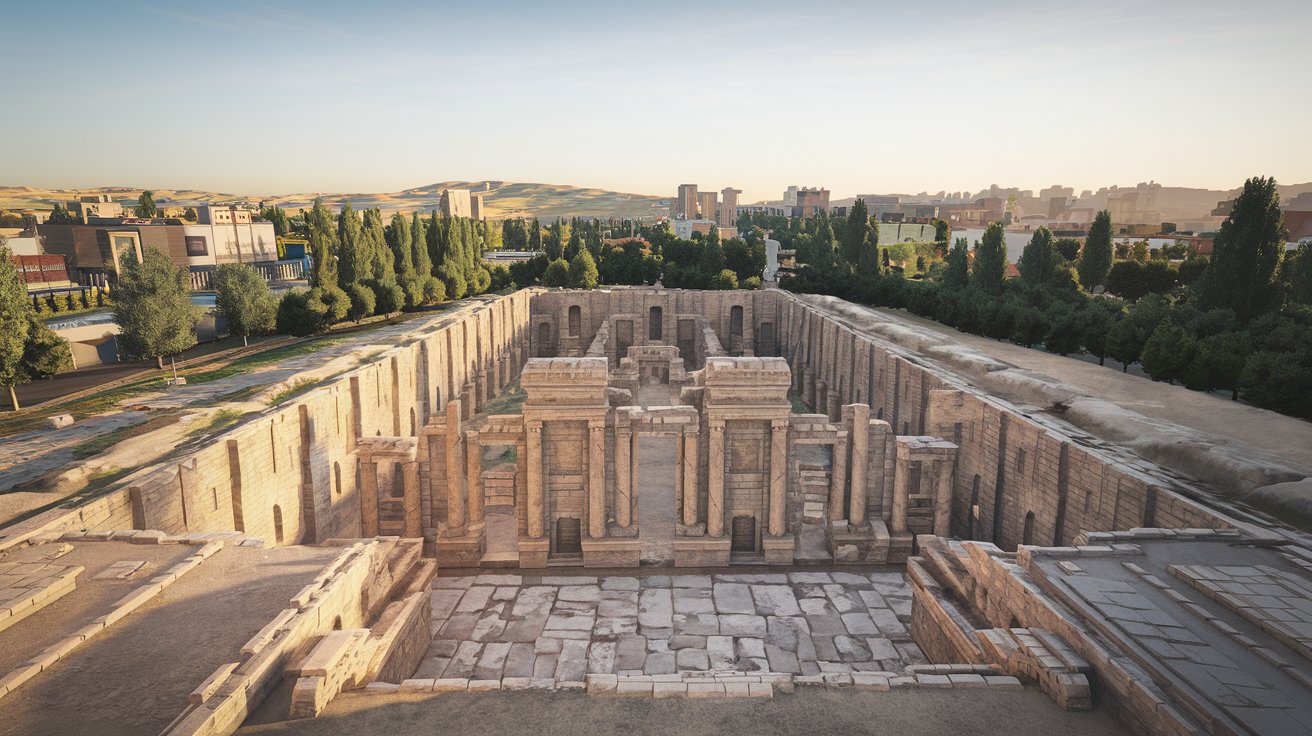
Nineveh, also spelled Ninive, was one of the most magnificent cities of the ancient world and served as the capital of the powerful Assyrian Empire. Located on the eastern bank of the Tigris River in what is now northern Iraq, near present-day Mosul, this ancient metropolis holds profound historical and biblical significance. Understanding Nineveh’s legacy reveals crucial insights into ancient Mesopotamian civilization, prophetic literature, and archaeological heritage that continues to captivate researchers in 2026.
What is the Meaning of Ninive and Its Historical Context
The name Ninive derives from the Akkadian word “Ninua,” which scholars believe honors Ishtar, the Mesopotamian goddess of love and war. The definition of Nineveh encompasses both the historical city-state and its symbolic representation in religious texts. Archaeological evidence from 2024-2026 excavations confirms that Nineveh’s origins date back to approximately 6000 BCE, making it one of humanity’s oldest continuously inhabited settlements until its destruction in 612 BCE.
The city reached its zenith during the reign of King Sennacherib (705-681 BCE), who transformed Nineveh into the largest city in the world at that time, covering approximately 1,800 acres with a population estimated between 100,000 and 150,000 inhabitants. The meaning of Nineveh in historical context represents the pinnacle of Assyrian imperial power, architectural innovation, and cultural achievement that influenced subsequent civilizations throughout Mesopotamia.
Is Nineveh in Iraq or Iran: Geographic Location
Nineveh is definitively located in Iraq, not Iran, specifically on the outskirts of modern Mosul in the Nineveh Governorate of northern Iraq. The ancient city ruins sit on the eastern bank of the Tigris River, approximately 250 miles north of Baghdad. This geographic positioning placed Nineveh at a strategic crossroads for ancient trade routes connecting Anatolia, Persia, and the Mediterranean world.
The confusion regarding whether Nineveh is in Iraq or Iran stems from the proximity of both modern nations and the historical extent of various empires. While the Persian Empire later conquered this region, the original Assyrian capital of Nineveh has always been within the boundaries of what constitutes modern Iraq. Current GPS coordinates place the archaeological site at approximately 36.36°N latitude and 43.15°E longitude, firmly within Iraqi territory as recognized internationally in 2026.
What is Nineveh Called Today and Modern Identification
Today, the ancient site of Nineveh is primarily known by its historical name and encompasses several archaeological mounds, most notably Tell Kuyunjik and Tell Nebi Yunus, located in the Mosul metropolitan area of Iraq. The modern neighborhood built around these ruins is called “Al-Nabi Yunus” (The Prophet Jonah) or simply referenced as the “Nineveh ruins” by archaeologists and historians. Unlike some ancient cities that evolved into modern municipalities with different names, Nineveh was abandoned after its destruction and never rebuilt as a functioning city.
The site received UNESCO World Heritage designation considerations and has been under Iraqi government protection since 2003, with renewed conservation efforts intensifying in 2024-2026 following damage sustained during regional conflicts. What Nineveh is called today in academic circles remains consistent with its ancient nomenclature, though local residents may refer to specific areas by neighborhood names that have developed around the archaeological zones over centuries.
Ninive Bible: The Book of Jonah and Biblical Accounts
The Ninive Bible references primarily center on the prophetic Book of Jonah, where God commands the prophet Jonah to preach repentance to Nineveh’s inhabitants. This biblical narrative portrays Nineveh as a great but sinful city that ultimately repents, temporarily saving itself from divine judgment. The story of Jonah and the great fish has become one of the most recognized biblical accounts, with Nineveh serving as the destination for his prophetic mission around the 8th century BCE.
Beyond Jonah, the Bible mentions Nineveh in multiple books including Genesis, Kings, Isaiah, Nahum, and Zephaniah. The prophet Nahum’s entire book focuses on predicting Nineveh’s eventual destruction, which occurred in 612 BCE when Babylonian and Median forces conquered the city. These biblical accounts describe Nineveh as having “more than 120,000 people who cannot tell their right hand from their left,” emphasizing both its population size and spiritual condition. Modern biblical archaeology conducted through 2026 has corroborated many historical details mentioned in these texts, including the city’s massive fortifications and rapid destruction.
What Made Nineveh So Evil: Biblical and Historical Perspectives
The characterization of Nineveh as “evil” in biblical literature stems from several specific practices documented both in scripture and historical records. The Assyrian Empire, with Nineveh as its capital, became notorious for brutal military tactics including mass deportations, psychological warfare, and graphic displays of violence against conquered peoples. Archaeological reliefs discovered in Nineveh’s palaces depict scenes of impalement, flaying, and dismemberment, which the Assyrians used as deliberate terror tactics to discourage rebellion.
What made Nineveh so evil from a biblical perspective included widespread idolatry, social injustice, exploitation of the poor, and violence against neighboring nations including Israel. The prophet Nahum describes Nineveh as “the city of blood, full of lies, full of plunder, never without victims.” Historical records from 2025-2026 scholarly analysis indicate that Assyrian kings like Ashurbanipal maintained extensive libraries (including the famous Library of Ashurbanipal) that documented military campaigns emphasizing cruelty as state policy. The combination of religious apostasy, systematic violence, and imperial oppression contributed to Nineveh’s biblical reputation as emblematic of human wickedness requiring divine intervention.
Ninive Mapa: Geographic Layout and Ancient City Planning
The Ninive mapa (Nineveh map) reveals sophisticated ancient urban planning spanning approximately 1,800 acres enclosed by massive defensive walls. The city’s layout featured a roughly rectangular shape with walls measuring approximately 12 kilometers in circumference, punctuated by 15 monumental gates including the famous Mashki Gate and Nergal Gate. Modern archaeological mapping conducted through 2026 using ground-penetrating radar and satellite imagery has revealed previously unknown structures and street networks beneath current development.
Key features on the mapa of ancient Nineveh include the Southwest Palace of Sennacherib, covering nearly 5 acres with at least 80 rooms decorated with carved stone panels; the North Palace of Ashurbanipal, famous for its lion hunt reliefs; and the temple complex dedicated to Ishtar. The city’s water management system included an elaborate aqueduct system bringing water from mountain sources over 50 kilometers away, with the Jerwan Aqueduct representing one of the oldest known arch bridges in history. Digital maps created in 2025-2026 now allow virtual reconstruction of Nineveh’s appearance during its imperial height, providing invaluable educational resources for understanding ancient Mesopotamian urbanism.
Nineveh Pronunciation and Linguistic Variations
The correct Nineveh pronunciation in English follows the phonetic pattern “NIN-uh-vuh” with emphasis on the first syllable. However, variations exist across different languages and scholarly traditions, with some preferring “nin-EH-vuh” particularly in British academic contexts. The original Akkadian pronunciation would have been closer to “Ninua” or “Ninuwā,” while the Hebrew biblical form appears as “Nineveh” (נִינְוֵה), pronounced “nee-neh-VEH” with guttural qualities absent in English.
Understanding proper pronunciation matters for academic discourse and biblical studies, though multiple accepted forms exist in 2026 linguistic standards. The Spanish variant “Nínive” uses an accented first syllable, while French renders it “Ninive” (nee-NEEV). Arabic speakers in modern Iraq refer to the site as “Naynawā” (نَيْنَوَى), preserving phonetic elements closer to the ancient Assyrian original. Educational resources updated through 2026 now include audio guides for proper pronunciation across these linguistic traditions, recognizing that scholarly communication benefits from standardization while respecting cultural variations in rendering ancient place names.
Archaeological Discoveries and the Library of Ashurbanipal
Modern archaeological work at Nineveh began in the 1840s with Austen Henry Layard’s excavations, which uncovered the magnificent palaces and the famous Library of Ashurbanipal. This ancient library contained approximately 30,000 clay tablets including the Epic of Gilgamesh, astronomical texts, medical treatises, and administrative records that revolutionized understanding of Mesopotamian civilization. Recent excavations from 2024-2026 continue revealing artifacts despite previous damage from conflicts, with international teams working to preserve and digitize remaining materials.
Significant discoveries include massive winged bull sculptures (lamassu) that guarded palace entrances, intricate ivory carvings, and relief panels depicting royal hunts and military campaigns. The archaeological record confirms biblical accounts of Nineveh’s magnificence while providing contextual details about daily life, religious practices, and governmental administration. Conservation efforts intensified in 2026 involve partnerships between Iraqi authorities, UNESCO, and international universities utilizing 3D scanning technology to create permanent digital records of artifacts and architectural features, ensuring that knowledge of Nineveh’s cultural heritage survives even if physical artifacts face deterioration or destruction.
The Fall of Nineveh in 612 BCE
The destruction of Nineveh in 612 BCE marked the end of the Assyrian Empire and fulfilled biblical prophecies recorded by Nahum and Zephaniah. A coalition of Babylonians under Nabopolassar and Medes under Cyaxares besieged the city for approximately three months before breaching its formidable defenses. Historical sources suggest that flooding from the Tigris River undermined sections of the city walls, enabling the attackers to enter and systematically destroy the city through fire and demolition.
The fall was so complete that Nineveh disappeared from historical consciousness for centuries, with Greek historian Xenophon passing by the ruins around 401 BCE without recognizing them as the once-mighty Assyrian capital. Archaeological evidence from burning layers, destroyed palace structures, and skeletal remains confirms the violence of the city’s end. The rapid collapse of such a powerful empire serves as a historical testament to political instability and military vulnerability when internal cohesion fails. Modern analysis conducted through 2026 suggests that environmental factors including drought and agricultural decline may have contributed to Nineveh’s inability to withstand the siege, offering cautionary parallels for contemporary urban resilience planning.
Ninive Hotel and Modern Tourism References
References to “Ninive hotel” typically relate to hospitality establishments in Mosul, Iraq, or other locations that adopt the historical name for branding purposes. In the Mosul area near the actual archaeological site, several hotels and guesthouses use variations of the Nineveh name to appeal to archaeological tourists, researchers, and heritage visitors. However, tourism infrastructure in the immediate vicinity of the ruins remains limited as of 2026 due to ongoing recovery and reconstruction efforts in the Mosul region.
For those planning to visit the Nineveh archaeological site, accommodations are primarily found in central Mosul, approximately 5-10 kilometers from the ruins. Security conditions have improved significantly since 2024, with the Iraqi government promoting cultural heritage tourism as part of economic development initiatives. Visitors in 2026 should coordinate with Iraqi tourism authorities and consider guided archaeological tours that provide historical context while ensuring site preservation. The hotel infrastructure continues developing with several international chains expressing interest in establishing properties to support growing academic and heritage tourism, though visitors should verify current conditions and accessibility before planning trips to this historically significant location.
Ninive Dubai and Contemporary Cultural References
The term “Ninive Dubai” does not refer to an official district or location within Dubai, United Arab Emirates, but rather appears in various commercial and cultural contexts. Some businesses, restaurants, or cultural organizations in Dubai may use the Ninive name to evoke Mesopotamian heritage, appealing to the significant Iraqi expatriate community and those interested in ancient Near Eastern culture. Dubai’s diverse international population includes many individuals with connections to Iraq who maintain cultural traditions and historical awareness of sites like Nineveh.
Cultural exhibitions in Dubai occasionally feature artifacts or replicas related to Mesopotamian civilizations including Nineveh, particularly at venues like the Etihad Museum or during special exhibitions at Dubai Museum. The connection between Nineveh and Dubai represents the broader phenomenon of diaspora communities preserving historical memory through naming conventions and cultural programming. As of 2026, several Iraqi cultural centers in Dubai host educational events discussing ancient Mesopotamian history, with Nineveh frequently featured as a symbol of Iraq’s rich archaeological heritage. These contemporary references serve important functions in maintaining cultural identity and educating younger generations about historical civilizations that shaped modern Middle Eastern identity.
Ninive Jonas: The Prophet Jonah Connection
The association “Ninive Jonas” (Nineveh Jonah) represents one of the most enduring biblical narratives connecting a prophet to a specific ancient city. According to the Book of Jonah, God commanded the Hebrew prophet Jonah to travel to Nineveh and warn its inhabitants of impending divine judgment due to their wickedness. Jonah’s initial refusal, subsequent experience being swallowed by a great fish, and eventual reluctant obedience form a narrative arc that emphasizes divine mercy and human responsibility.
The traditional tomb of the Prophet Jonah (Nebi Yunus in Arabic) was located at Tell Nebi Yunus in Nineveh until its destruction by extremist forces in 2014. This site had been venerated by Jews, Christians, and Muslims for centuries as the burial place of the prophet. Archaeological work from 2017-2026 in the aftermath of this destruction unexpectedly revealed previously unknown Assyrian palace structures and artifacts beneath the destroyed shrine, including marble cuneiform inscriptions and sculptures. The Ninive Jonas connection remains significant in interfaith dialogue and biblical studies, with the narrative serving as a powerful testament to themes of repentance, divine compassion, and the universal human capacity for moral transformation regardless of cultural or religious background.
Related video about ninive
This video complements the article information with a practical visual demonstration.
FAQ – Common Questions
What is the meaning of Ninive?
Ninive (Nineveh) derives from the Akkadian word “Ninua,” likely honoring the Mesopotamian goddess Ishtar. The name represents the ancient capital of the Assyrian Empire located in modern Iraq. Historically, the meaning encompasses both the physical city-state and its symbolic representation as a center of power, culture, and eventual divine judgment in biblical literature. Nineveh’s name has become synonymous with ancient Mesopotamian civilization at its peak development.
What made Nineveh so evil?
Nineveh’s biblical characterization as “evil” stemmed from multiple factors including the Assyrian Empire’s brutal military tactics, systematic violence against conquered peoples, widespread idolatry, and social injustice. Historical records and palace reliefs document practices like impalement, mass deportations, and psychological warfare used as state policy. The prophet Nahum described Nineveh as “the city of blood, full of lies, full of plunder,” reflecting both religious apostasy and imperial cruelty that made the city emblematic of wickedness requiring divine intervention in biblical narrative.
Is Nineveh in Iraq or Iran?
Nineveh is definitively located in Iraq, not Iran. The ancient city ruins sit on the eastern bank of the Tigris River near modern Mosul in northern Iraq’s Nineveh Governorate, approximately 250 miles north of Baghdad. The confusion arises from regional proximity and historical empires that spanned both territories, but the original Assyrian capital has always been within what constitutes modern Iraq. As of 2026, the archaeological site remains under Iraqi government jurisdiction at coordinates approximately 36.36°N, 43.15°E.
What is Nineveh called today?
Today, the ancient site is still called Nineveh or referenced as the “Nineveh ruins” in archaeological and historical contexts. The area encompasses Tell Kuyunjik and Tell Nebi Yunus mounds located in the Mosul metropolitan area. The modern neighborhood surrounding the ruins is known as “Al-Nabi Yunus” (The Prophet Jonah). Unlike some ancient cities that evolved into modern municipalities with different names, Nineveh was abandoned after its 612 BCE destruction and never rebuilt as a functioning city, maintaining its historical nomenclature through the present day.
How do you pronounce Nineveh correctly?
The standard English pronunciation of Nineveh is “NIN-uh-vuh” with emphasis on the first syllable, though “nin-EH-vuh” is also accepted in British academic contexts. The original Akkadian form was closer to “Ninua,” while Hebrew biblical pronunciation is “nee-neh-VEH” with guttural qualities. Modern Arabic speakers in Iraq say “Naynawā,” preserving phonetic elements closer to the ancient Assyrian original. Multiple accepted forms exist across linguistic traditions, with educational resources in 2026 providing audio guides for proper pronunciation in various languages.
What happened to the Library of Ashurbanipal?
The Library of Ashurbanipal in Nineveh contained approximately 30,000 clay tablets including the Epic of Gilgamesh, astronomical texts, and medical treatises. When Nineveh was destroyed in 612 BCE, the library was burned, but ironically the fire baked the clay tablets, preserving them for millennia. British archaeologist Austen Henry Layard discovered the library in the 1840s, and most tablets now reside in the British Museum. Digital preservation efforts intensified through 2024-2026 ensure these invaluable records of Mesopotamian civilization remain accessible despite physical artifact vulnerability.
| Key Aspect | Important Details | Significance |
|---|---|---|
| Location | Near Mosul, Iraq on Tigris River (36.36°N, 43.15°E) | Strategic position for ancient trade and military power |
| Peak Period | 705-612 BCE under Sennacherib and Ashurbanipal | Largest city in the world with 100,000-150,000 inhabitants |
| Biblical Role | Featured in Jonah, Nahum, Genesis, and other books | Symbol of wickedness, repentance, and divine judgment |
| Archaeological Treasure | Library of Ashurbanipal with 30,000 tablets, palace reliefs | Revolutionized understanding of Mesopotamian civilization |
| Destruction | 612 BCE by Babylonian-Median coalition | Ended Assyrian Empire, fulfilled biblical prophecies |
| Modern Status (2026) | Protected archaeological site, UNESCO consideration | Cultural heritage preservation, growing academic tourism |