
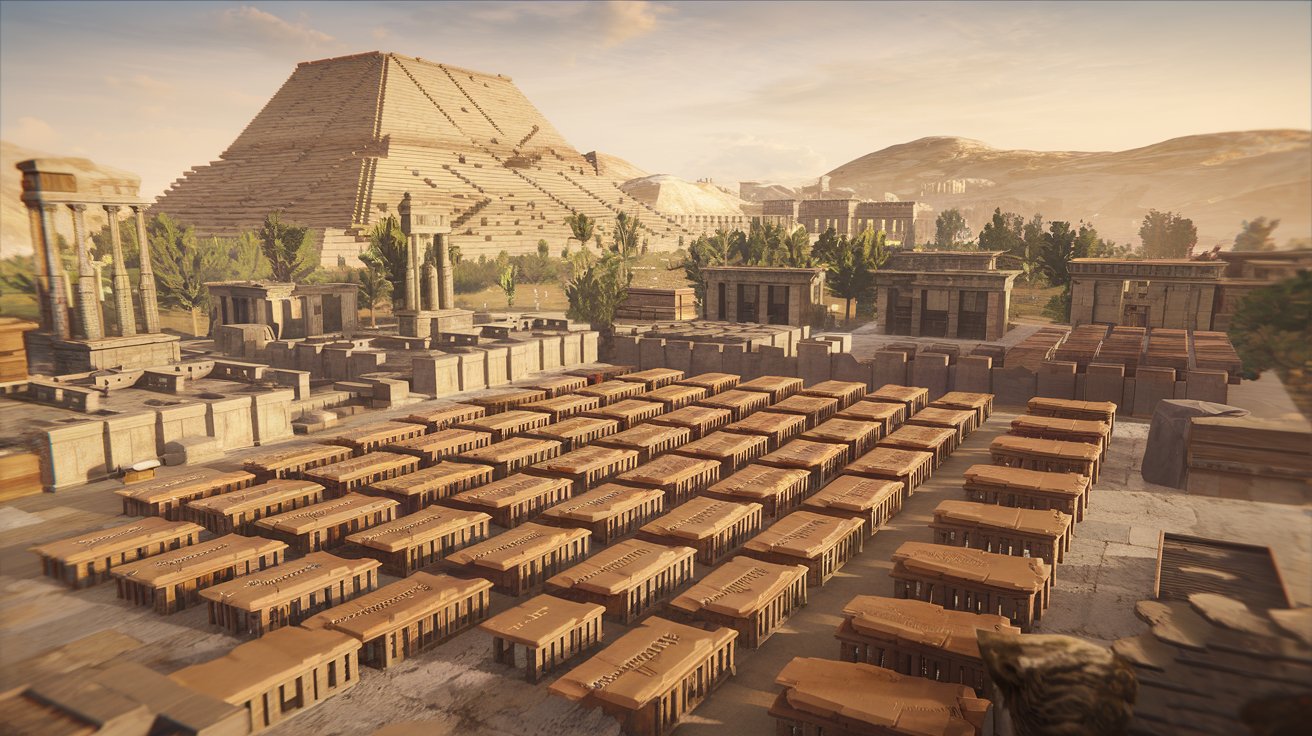
The Assyrian Empire was one of the most powerful civilizations in ancient Mesopotamia, dominating the Near East from approximately 2500 BCE to 609 BCE. Located in what is now northern Iraq, the Assyrian kingdom became renowned for its military prowess, administrative efficiency, and cultural achievements. This ancient empire transformed from a small city-state centered around the city of Ashur into a vast territorial power that conquered lands spanning from Egypt to Persia, leaving an indelible mark on human history.
What Country Was Ancient Assyria
The Assyrian homeland was located in the northern region of ancient Mesopotamia, primarily corresponding to modern-day northern Iraq. The geographical center of Assyrian civilization encompassed the area around the Tigris River, with major cities including Ashur, Nineveh, Nimrud, and Khorsabad. This strategic location provided the Assyrians with access to vital trade routes connecting the Mediterranean Sea to the Persian Gulf, facilitating economic prosperity and cultural exchange throughout their history.
At its peak during the Neo-Assyrian period (911-609 BCE), the empire extended far beyond its original borders. The Assyrians controlled territories that included parts of present-day Iraq, Syria, Turkey, Iran, Lebanon, Israel, Jordan, and even Egypt. The empire’s capital moved several times throughout history, with Nineveh serving as the final and most magnificent capital city under King Sennacherib. By 2026, archaeological research continues to uncover new insights about Assyrian territorial administration and provincial governance systems that allowed them to maintain control over such vast distances.
Who Were the Assyrians
The Assyrians were a Semitic people who spoke Akkadian and developed one of antiquity’s most sophisticated civilizations. These ancient inhabitants of northern Mesopotamia distinguished themselves through their exceptional military organization, bureaucratic systems, and cultural achievements. The Assyrian identity was deeply rooted in their relationship with their patron god Ashur and their belief in a divine mandate to expand and rule. They were skilled warriors, administrators, engineers, and artisans who contributed significantly to ancient Near Eastern civilization.
The ethnic composition of the Assyrian Empire was diverse, incorporating numerous conquered peoples while maintaining a distinct Assyrian ruling class. Modern scholarly research from 2026 indicates that Assyrian society was hierarchically structured, with the king at the apex, followed by nobility, priests, merchants, craftsmen, farmers, and slaves. The Assyrian people developed cuneiform writing to an advanced level, created extensive libraries, and pioneered military technologies including iron weapons and siege warfare techniques. Their descendants, known as Assyrian Christians, continue to preserve their unique cultural identity in diaspora communities across the United States and worldwide.
Origins and Early History of the Assyrian People
The origins of the Assyrians trace back to approximately 2500 BCE when Semitic-speaking tribes settled in northern Mesopotamia. These early inhabitants established the city of Ashur on the western bank of the Tigris River, which would become the religious and political heart of Assyrian civilization. Archaeological evidence from 2026 research indicates that the earliest Assyrians were initially dominated by the Sumerian and Akkadian empires to their south, absorbing cultural and technological influences that shaped their development.
During the Old Assyrian period (2000-1750 BCE), the Assyrians established themselves as formidable merchants, creating extensive trade networks that reached as far as Anatolia. The discovery of thousands of clay tablets in Kanesh, Turkey, reveals sophisticated Assyrian commercial practices including contracts, loans, and partnership agreements. This mercantile success provided the economic foundation for later military expansion. The Assyrians gradually developed their distinct cultural identity, combining indigenous traditions with influences from surrounding civilizations while maintaining their unique devotion to the god Ashur as their supreme deity and protector.
From City-State to Empire
The transformation of Assyria from a modest city-state into a dominant empire occurred through several distinct phases over nearly two millennia. This remarkable expansion was driven by military innovation, administrative excellence, and an ideology of divinely sanctioned conquest that justified continuous territorial growth.
Middle Assyrian Period and Early Expansion
The Middle Assyrian period (1365-1074 BCE) marked the first major phase of imperial expansion. Under kings like Ashur-uballit I, the Assyrians broke free from Mitanni domination around 1340 BCE and began asserting their independence. King Adad-nirari I conquered the remnants of the Mitanni kingdom and expanded Assyrian territory into Syria and Babylonia. This era witnessed the development of core military strategies and administrative systems that would characterize later Assyrian conquests.
Tiglath-Pileser I (1114-1076 BCE) expanded the Middle Assyrian Empire to unprecedented size, reaching the Mediterranean Sea and conquering 42 lands according to his own inscriptions. However, this early empire proved unstable, and after his death, Assyria entered a period of decline due to Aramaean invasions and internal troubles. Recent archaeological studies from 2026 have revealed that even during this contraction, Assyrian cultural identity and military traditions remained strong, setting the stage for the spectacular revival that would follow.
Neo-Assyrian Empire at Its Zenith
The Neo-Assyrian Empire (911-609 BCE) represents the peak of Assyrian power and the largest empire the world had yet seen. Beginning with Adad-nirari II around 911 BCE, a series of aggressive warrior-kings systematically rebuilt Assyrian dominance across Mesopotamia. Ashurnasirpal II (883-859 BCE) established a pattern of brutal conquest and mass deportation that became an Assyrian hallmark, relocating entire populations to prevent rebellion and integrate diverse peoples into the empire.
Under Tiglath-Pileser III (745-727 BCE), the empire underwent revolutionary administrative reforms. He reorganized provinces, created a standing army, and implemented systematic deportation policies affecting hundreds of thousands of people. His successors, including Sargon II, Sennacherib, and Esarhaddon, continued expansion in all directions. By around 630 BCE under Ashurbanipal, the empire reached its maximum extent, controlling Egypt, the Levant, Anatolia, and territories extending into the Iranian plateau. This enormous realm encompassed an estimated 1.4 million square kilometers, making it the largest empire of its era. Contemporary 2026 research utilizing satellite imagery and ground surveys continues to identify previously unknown Assyrian administrative centers and fortifications throughout this vast territory.
Military Might and Conquest Strategies
The Assyrian military machine was the most sophisticated fighting force of the ancient world, combining technological innovation, strategic brilliance, and psychological warfare. The Assyrians pioneered the use of iron weapons on a mass scale, giving them a decisive advantage over enemies still relying on bronze. Their army was organized into specialized units including charioteers, cavalry, archers, infantry, and engineers, with each component trained for specific battlefield roles.
Siege warfare became an Assyrian specialty, with engineers developing battering rams, siege towers, and tunneling techniques to breach even the most formidable fortifications. The Assyrians understood that military success required not just battlefield victories but also strategic control of territory. They constructed an extensive network of fortified roads and communication systems enabling rapid troop deployment across the empire. Recent military history analyses from 2026 compare Assyrian logistical capabilities favorably with later Roman systems, noting their sophisticated supply chains and garrison networks.
The psychological dimension of Assyrian warfare was equally important. Kings commissioned detailed reliefs and inscriptions documenting brutal punishments inflicted on rebels, including impalement, flaying, and mass executions. These images and texts served as propaganda, discouraging resistance before battles even began. However, the Assyrians also offered generous terms to cities that surrendered peacefully, creating incentives for submission. This combination of terror and diplomacy proved highly effective in building and maintaining their vast empire.
Assyrian Religion and Divine Mandate
Religion formed the ideological foundation of the Assyrian Empire, with the king serving as the earthly representative of the gods and conquest justified as divine will. The Assyrians believed they were chosen by the gods to bring order and civilization to the world, a conviction that fueled their relentless expansion and legitimized their rule over conquered peoples.
Ashur: Supreme God and National Deity
Ashur was the chief god of the Assyrian pantheon, originally a local deity of the city of Ashur who evolved into a national god representing Assyrian identity and imperial destiny. Unlike other Mesopotamian deities, Ashur had no elaborate mythology; instead, he was primarily conceived as the divine patron of the Assyrian state and military conquest. Kings ruled in Ashur’s name, and military campaigns were undertaken as service to this supreme deity who demanded the submission of foreign lands.
The concept of divine kingship placed the Assyrian monarch as Ashur’s appointed regent on earth. Royal inscriptions consistently emphasized that military victories resulted from Ashur’s direct support, while defeats indicated divine displeasure requiring atonement. This theological framework made rebellion against the Assyrian king equivalent to rebellion against the gods themselves. Modern religious studies from 2026 note parallels between Assyrian theocratic imperialism and later imperial ideologies, demonstrating how religious concepts have historically legitimized political expansion.
Ishtar: Goddess of War and Love
Ishtar occupied a unique position in Assyrian religion as both goddess of love and goddess of war, embodying the dual nature of divine power. The Assyrians particularly venerated her warlike aspect, invoking her support before military campaigns. Temples dedicated to Ishtar existed in major Assyrian cities, with the most important located in Nineveh and Arbela, where priestesses delivered oracles predicting military outcomes and providing divine guidance to kings.
The cult of Ishtar included elaborate rituals, festivals, and sacred prostitution practices that scandalized later observers. Assyrian kings sought Ishtar’s favor through offerings, dedicating war spoils to her temples and attributing victories to her intervention. The goddess was depicted in Assyrian art as a fierce warrior standing on a lion, armed with weapons and radiating divine power. Contemporary scholars in 2026 analyze how Ishtar’s prominence in Assyrian religion reflects broader gender dynamics in ancient Mesopotamian society, where female deities wielded considerable power despite patriarchal social structures.
Nergal and Shamash: Justice and Destruction
Nergal was the feared god of death, plague, and war, representing the destructive forces that the Assyrians unleashed upon their enemies. Associated with the underworld and disease, Nergal embodied the terror that Assyrian armies inspired across the ancient Near East. His cult center in Kutha remained important throughout Assyrian history, and kings invoked Nergal when threatening enemies with annihilation. The god symbolized the Assyrian capacity for total warfare and merciless retribution against those who defied imperial authority.
Shamash, the sun god, provided a counterbalance as the deity of justice, law, and righteousness. The Assyrians believed that Shamash illuminated hidden crimes and ensured just governance. Kings presented themselves as champions of Shamash’s justice, claiming their conquests restored proper order ordained by the gods. This theological framework portrayed Assyrian imperialism not as mere aggression but as the enforcement of divine law and cosmic order. The tension between Nergal’s destructive power and Shamash’s justice reflected the Assyrian self-image as harsh but righteous rulers bringing civilization to chaotic lands.
Administrative Excellence and Cultural Achievements
Beyond military conquest, the Assyrians developed sophisticated administrative systems that enabled them to govern their vast empire effectively. They divided their territories into provinces governed by appointed officials who reported directly to the king. A remarkable courier system allowed messages to travel rapidly across the empire, with relay stations enabling communication between the capital and distant provinces within days. Tax collection, census taking, and legal administration were systematically organized, creating one of history’s first truly bureaucratic empires.
The Assyrian cultural legacy includes remarkable achievements in art, architecture, literature, and scholarship. Assyrian palaces featured magnificent relief sculptures depicting royal hunts, military campaigns, and religious ceremonies. These artworks provide invaluable historical documentation while demonstrating exceptional artistic skill. King Ashurbanipal established the famous Library of Nineveh, containing over 30,000 clay tablets covering subjects from medicine to astronomy, literature to divination. This library preserved much of Mesopotamian learning, including the Epic of Gilgamesh, for posterity.
Assyrian contributions to engineering and urban planning were equally impressive. They constructed massive irrigation systems, aqueducts, and canals that transformed agriculture in their territories. Cities like Nineveh featured advanced water supply systems, paved streets, and monumental architecture including ziggurats and palace complexes covering hundreds of acres. Recent archaeological work in 2026 continues to reveal the sophistication of Assyrian engineering, with discoveries of complex hydraulic systems and urban infrastructure that rivaled much later civilizations.
Constant Rebellion and Internal Instability
Despite their military might, the Assyrians faced perpetual resistance throughout their empire. Conquered peoples never fully accepted Assyrian rule, and rebellions erupted whenever imperial control weakened. The Babylonians in southern Mesopotamia proved especially troublesome, repeatedly revolting despite brutal suppression. In the west, kingdoms like Judah, Damascus, and various Phoenician city-states constantly conspired against Assyrian overlordship, requiring repeated military campaigns to maintain control.
The deportation policies that the Assyrians implemented to prevent rebellion had mixed results. While relocating entire populations disrupted traditional power structures and created multicultural settlements loyal to the empire, it also generated resentment and administrative challenges. Managing an empire encompassing dozens of languages, religions, and ethnic groups required constant military presence and administrative vigilance. The Assyrians garrisoned troops throughout their territories and conducted regular punitive expeditions, but these measures could not eliminate the underlying tensions that plagued the empire.
Recent historical analyses from 2026 emphasize how Assyrian brutality, while effective in the short term, ultimately contributed to the empire’s collapse. The reign of terror that intimidated enemies also ensured that conquered peoples celebrated rather than mourned Assyrian defeats. When the empire finally weakened, former subjects eagerly joined coalitions to destroy it completely. This dynamic illustrates how empires built primarily on military force and fear rather than cultural integration or ideological appeal face inherent instability requiring constant coercion to maintain.
Assyria in the Bible and Religious Texts
The Assyrian Empire features prominently in the Hebrew Bible, where it appears as both an instrument of divine judgment and an arrogant power ultimately humbled by God. The biblical narrative describes how the Assyrians conquered the northern Kingdom of Israel in 722 BCE, deporting the ten northern tribes and ending Israelite independence. This event, known as the Assyrian Captivity, had profound theological significance for Jewish identity and biblical prophecy, with the fate of the “lost tribes” remaining a subject of speculation into modern times.
The siege of Jerusalem by Sennacherib in 701 BCE represents one of the most dramatic biblical encounters with Assyrian power. According to 2 Kings, the Assyrian army besieging Jerusalem was miraculously destroyed, forcing Sennacherib to withdraw. Assyrian records confirm the campaign occurred but present a different narrative, claiming Hezekiah paid tribute. This event has been extensively studied by scholars in 2026 using archaeological evidence, historical texts, and biblical analysis to reconstruct what actually happened during this pivotal encounter.
Biblical prophets, particularly Nahum and Isaiah, delivered oracles concerning Assyria’s fate. Nahum’s entire prophecy celebrates Nineveh’s coming destruction, reflecting the intense hostility that Assyrian imperialism generated among subject peoples. These biblical texts provide valuable historical perspectives on how conquered populations viewed the Assyrian Empire, complementing Assyrian royal inscriptions that naturally present a more favorable self-image. The biblical portrayal of Assyria as a powerful but ultimately doomed empire that challenged divine authority resonated throughout Western religious tradition.
The Fall of the Assyrian Empire
The collapse of the Assyrian Empire came with startling rapidity after centuries of dominance. Following Ashurbanipal’s death around 631 BCE, the empire descended into civil war as rival claimants fought for the throne. This internal strife provided opportunities for subject peoples to revolt and external enemies to attack. The Babylonians under Nabopolassar allied with the Medes from Iran, forming a coalition determined to destroy Assyrian power completely rather than merely gaining independence.
Between 616 and 609 BCE, the allied forces systematically conquered Assyrian territories and besieged the great cities. Ashur fell in 614 BCE, Nineveh in 612 BCE, and the last Assyrian resistance was crushed at Harran in 609 BCE. The destruction was thorough and deliberate; Nineveh was so completely destroyed that its location was forgotten for over two millennia. Ancient sources describe how former subjects celebrated the empire’s downfall, with the biblical prophet Nahum expressing sentiments shared by many: “All who hear the news about you clap their hands at your fall, for who has not felt your endless cruelty?”
The reasons for the swift collapse have been debated by historians. Military overextension certainly played a role, as maintaining control over such vast territories required constant campaigning that exhausted resources and manpower. The empire’s reliance on terror rather than cultural integration meant subject peoples had no loyalty to Assyrian rule. Climate change and agricultural disruption may have weakened the economic base. Recent interdisciplinary research from 2026 incorporating climate data, archaeological evidence, and textual analysis suggests that a combination of factors—drought, civil war, and coordinated external attacks—created a perfect storm that overwhelmed even the mighty Assyrian military machine. The empire that had dominated the ancient Near East for centuries vanished in less than two decades, leaving its magnificent cities as ruins buried beneath centuries of dust.
Legacy of the Assyrian Empire
Despite their complete political destruction, the Assyrians left a profound legacy that influenced subsequent empires and civilizations. The administrative systems they developed—provincial organization, communication networks, and bureaucratic governance—were adopted by the Persian Empire that emerged after Assyria’s fall. The Persians essentially inherited the Assyrian imperial model while moderating its brutal aspects, demonstrating that Assyrian innovations in statecraft outlived the empire itself.
The cultural contributions preserved in Assyrian libraries, particularly Ashurbanipal’s collection at Nineveh, safeguarded much of Mesopotamian literature and learning. When British archaeologists rediscovered these tablets in the 19th century, they revolutionized understanding of ancient Near Eastern civilization, revealing sophisticated literary, scientific, and historical traditions. The Epic of Gilgamesh, mathematical texts, astronomical observations, and historical chronicles survived because Assyrian scribes copied and preserved them.
Modern Assyrian communities maintain a continuous ethnic and cultural identity stretching back to the ancient empire. Assyrian Christians, speaking dialects of Aramaic, preserve unique traditions and cultural practices linking them to their ancient ancestors. In the United States, Assyrian diaspora communities, particularly in Michigan, Illinois, and California, actively celebrate their heritage through cultural organizations, language preservation efforts, and historical education. Contemporary Assyrian identity demonstrates remarkable continuity, with modern Assyrians viewing themselves as descendants of the ancient empire despite over 2,600 years of history and diaspora. Recent genetic studies from 2026 confirm significant genetic continuity between modern Assyrians and ancient populations from northern Mesopotamia, validating these longstanding identity claims.
Related video about assyrische rijk
This video complements the article information with a practical visual demonstration.
Your questions answered
What modern country was the Assyrian Empire located in?
The Assyrian Empire’s heartland was located in what is now northern Iraq, centered around the Tigris River region. The ancient Assyrian cities of Ashur, Nineveh, and Nimrud are all in present-day Iraq near Mosul. At its peak, the empire extended beyond Iraq to include territories in modern Syria, Turkey, Iran, Lebanon, Israel, Jordan, and Egypt. However, the core Assyrian homeland where their civilization originated and developed corresponds specifically to the northern regions of contemporary Iraq, an area that remains home to Assyrian Christian communities maintaining their ancient ethnic identity.
Who were the Assyrians and what happened to them?
The Assyrians were a Semitic people who built one of the ancient world’s most powerful empires in Mesopotamia between 2500 BCE and 609 BCE. They were renowned as fierce warriors, skilled administrators, and sophisticated scholars who spoke Akkadian and worshipped gods led by Ashur. After their empire’s destruction by the Babylonian-Median alliance in 612-609 BCE, the Assyrian people did not disappear. They continued as a distinct ethnic group, eventually converting to Christianity in the early centuries CE. Today, approximately 3-4 million Assyrians live worldwide, with significant populations in Iraq, Syria, Iran, and diaspora communities in the United States, particularly in Michigan, Illinois, and California, where they preserve their unique language, culture, and identity.
What role does Assyria play in the Bible?
Assyria features prominently in biblical texts as a major imperial power that conquered the northern Kingdom of Israel in 722 BCE, deporting the ten northern tribes in what became known as the Assyrian Captivity. The Bible presents Assyria as an instrument of divine judgment against Israel’s sins while also portraying Assyrian arrogance that would ultimately be punished. Significant biblical events include Sennacherib’s siege of Jerusalem in 701 BCE, which ended mysteriously according to 2 Kings 19, and the prophecy of Jonah directed at Nineveh. Prophets like Isaiah and Nahum delivered extensive oracles concerning Assyria, with Nahum’s entire book celebrating the empire’s coming destruction. These biblical references provide valuable historical information about Assyrian military campaigns while reflecting how conquered peoples viewed this formidable empire.
What caused the fall of the Assyrian Empire?
The Assyrian Empire collapsed between 616-609 BCE due to a combination of internal instability and external attacks. After Emperor Ashurbanipal’s death around 631 BCE, civil war weakened the empire as rivals fought for the throne. This internal chaos allowed the Babylonians under Nabopolassar and the Medes from Iran to form a coalition that systematically conquered Assyrian territories. The empire’s brutal policies had created universal hatred among subject peoples, who eagerly joined or supported the anti-Assyrian alliance. Military overextension, economic strain from constant warfare, possible climate change affecting agriculture, and the empire’s reliance on terror rather than genuine loyalty all contributed to its surprisingly rapid collapse. The great cities of Ashur, Nineveh, and Harran fell in quick succession, and the empire that had dominated the Near East for centuries was completely destroyed within two decades.
What were the major achievements of the Assyrian Empire?
The Assyrians made remarkable contributions to ancient civilization including pioneering iron weaponry, developing sophisticated siege warfare techniques, and creating the world’s first truly professional standing army. They established advanced administrative systems with provincial governance, rapid communication networks, and systematic tax collection that influenced later empires. Culturally, the Assyrians produced magnificent palace reliefs, monumental architecture, and King Ashurbanipal’s famous library at Nineveh containing over 30,000 clay tablets preserving Mesopotamian literature and learning, including the Epic of Gilgamesh. Their engineering achievements included complex irrigation systems, aqueducts, and urban infrastructure. They developed one of history’s first comprehensive legal codes and advanced astronomical observations. These contributions demonstrate that despite their fearsome military reputation, the Assyrians were also sophisticated scholars, engineers, and administrators whose innovations influenced subsequent civilizations long after their empire’s destruction.
How did Assyrian religion justify their empire?
Assyrian imperial ideology centered on divine mandate from their supreme god Ashur, who they believed had chosen them to rule the world and bring civilization to chaotic lands. The Assyrian king served as Ashur’s earthly representative, making conquest a religious duty rather than mere aggression. Military campaigns were presented as service to the gods, with victories attributed to divine support and defeats indicating the gods’ displeasure requiring atonement. This theological framework made rebellion against Assyrian rule equivalent to defying the gods themselves, providing powerful justification for brutal suppression of resistance. Other important deities included Ishtar (goddess of war and love), Shamash (sun god of justice), and Nergal (god of death and plague). This religious ideology, portraying Assyrian imperialism as fulfilling cosmic order ordained by the gods, legitimized their conquests and helped unite diverse Assyrian territories under a common ideological framework centered on divine kingship and sacred warfare.
| Historical Period | Key Developments | Lasting Impact |
|---|---|---|
| Old Assyrian (2500-1750 BCE) | Established trade networks across Mesopotamia and Anatolia; city of Ashur founded as religious center | Created economic foundation for later military expansion and established distinct Assyrian identity |
| Middle Assyrian (1365-1074 BCE) | First major territorial expansion under Ashur-uballit I; development of military strategies and administrative systems | Established core imperial methods including deportation policies and provincial governance |
| Neo-Assyrian (911-609 BCE) | Greatest territorial extent reaching 1.4 million sq km; capital at Nineveh; Library of Ashurbanipal | Preserved Mesopotamian literature; influenced Persian administrative systems; demonstrated limits of empire based on fear |
| Religious Ideology | Divine mandate from god Ashur justified conquest; king as earthly representative of gods; elaborate temple systems | Pioneered theocratic imperialism model; influenced later religious justifications for political expansion |
| Military Innovation | Iron weapons, professional standing army, specialized units, advanced siege warfare, psychological terror tactics | Revolutionized ancient warfare; established military organizational principles used by subsequent empires |
| Modern Legacy | Continuous Assyrian ethnic identity maintained through 2,600+ years; diaspora communities in United States and worldwide | Demonstrates remarkable cultural continuity; preserved unique Aramaic dialects; maintained distinct Christian traditions |