
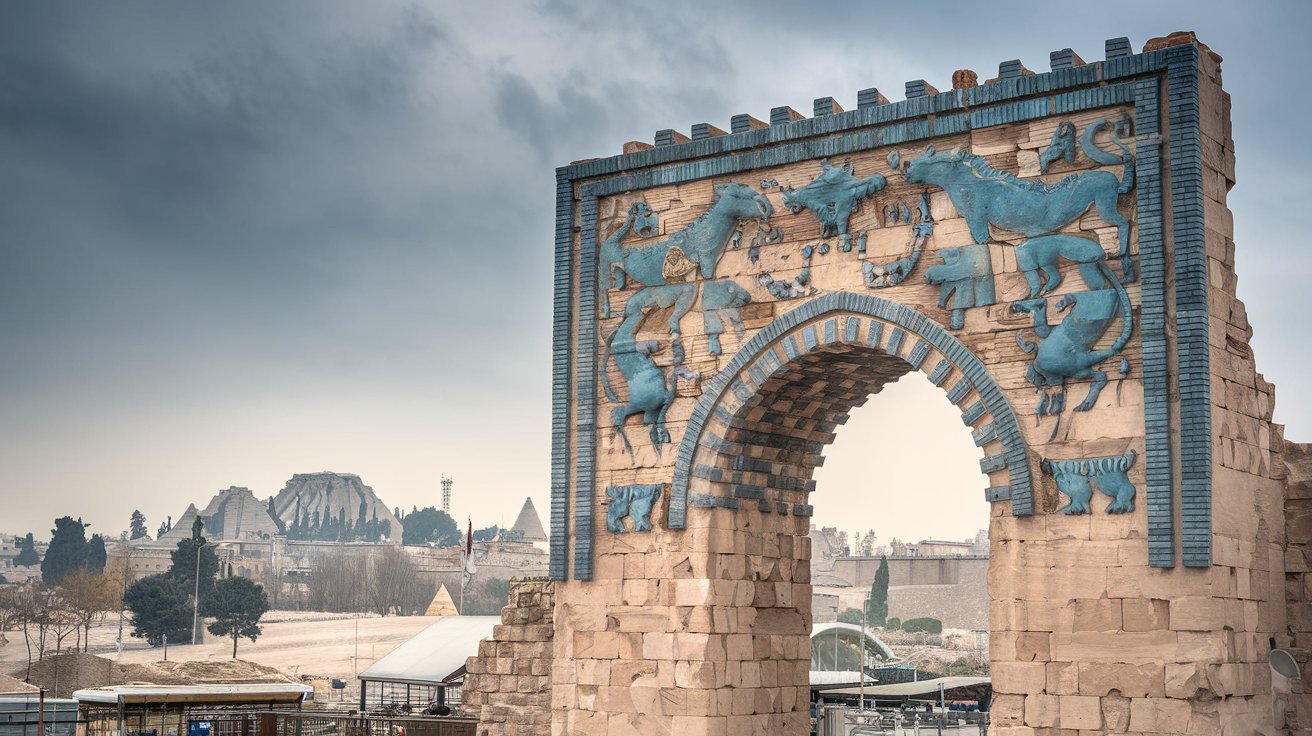
The ancient city of Babylon stands as one of history’s most influential civilizations, located in modern-day Iraq approximately 55 miles south of Baghdad. As the capital of Babylonia in Mesopotamia, this legendary metropolis flourished between 1894 BCE and 539 BCE, leaving an indelible mark on human civilization through its legal codes, architectural marvels, and profound religious significance across Judaism, Christianity, and Islam.
What Country Is Babylon Today: Modern Location and Archaeological Site
The ruins of ancient Babylon are located in present-day Iraq, specifically in the Babil Governorate about 85 kilometers south of the capital city Baghdad. The site sits along the Euphrates River in the fertile Mesopotamian plain, a region often called the Cradle of Civilization. In 2026, the archaeological site remains a protected UNESCO World Heritage Site, designated in 2019 despite ongoing conservation challenges in the region.
The modern city nearest to the ancient ruins is Hillah, a provincial capital with approximately 500,000 residents as of 2026. Visitors to Iraq can access the Babylon archaeological site through organized tours, though travel restrictions and security considerations continue to affect tourism. The Iraqi government has invested in preservation efforts since 2020, with international partnerships helping to protect the fragile mud-brick structures from erosion and environmental damage.
The geographical coordinates of ancient Babylon are approximately 32.5355° N latitude and 44.4275° E longitude. The site covers roughly 2,500 acres, though much of the original city remains unexcated beneath the Iraqi landscape. Current archaeological surveys using ground-penetrating radar suggest that less than 15% of ancient Babylon has been systematically explored, leaving vast treasures of knowledge still buried.
The Rise of Babylon: From Port City to Empire Under Hammurabi
Babylon emerged as a minor port city around 2300 BCE under the Akkadian Empire, but its transformation into a dominant power began with the First Babylonian Dynasty established around 1894 BCE. The city’s strategic location along vital trade routes connecting the Persian Gulf to Anatolia enabled its economic prosperity and cultural exchange. Early Babylon served as a commercial hub where merchants traded textiles, grains, metals, and luxury goods from across the ancient world.
The city achieved unprecedented prominence under King Hammurabi, who ruled from 1792 to 1750 BCE. Hammurabi transformed Babylon from a regional power into the capital of a vast empire stretching across Mesopotamia. His greatest legacy remains the Code of Hammurabi, one of humanity’s oldest and most complete written legal codes containing 282 laws covering commercial transactions, family relations, criminal justice, and civil obligations. This basalt stele, standing over seven feet tall and now housed in the Louvre Museum in Paris, established principles that influenced legal systems for millennia.
Under Hammurabi’s rule, Babylon’s population swelled to an estimated 200,000 residents, making it one of the largest cities in the ancient world. The king invested heavily in infrastructure projects including irrigation canals, defensive walls, and monumental temples dedicated to Marduk, Babylon’s patron deity. Hammurabi’s administrative reforms created a centralized bureaucracy with appointed governors, standardized weights and measures, and established Akkadian as the empire’s official language, fostering unity across diverse ethnic groups.
Babylon’s Decline and Assyrian Domination
Following Hammurabi’s death in 1750 BCE, the Babylonian Empire gradually declined as regional powers challenged its authority. The Kassites, a people from the Zagros Mountains, conquered Babylon around 1595 BCE and established a dynasty that ruled for over four centuries. This period saw cultural continuity but diminished political influence as Babylon became subordinate to emerging powers like the Hittites and Elamites.
The Assyrian Empire, centered in northern Mesopotamia, increasingly dominated Babylon from the 9th century BCE onward. Assyrian kings viewed Babylon with a mixture of reverence for its ancient culture and determination to control its wealth and religious prestige. The relationship oscillated between periods of Assyrian direct rule and Babylonian vassal status, with frequent rebellions met by brutal military campaigns. In 689 BCE, Assyrian King Sennacherib destroyed much of Babylon after a revolt, flooding the city and carrying away the statue of Marduk.
However, Assyrian kings also recognized Babylon’s cultural importance. Sennacherib’s son Esarhaddon reversed his father’s destruction, rebuilding temples and restoring Marduk’s statue to legitimate his rule. Ashurbanipal, the last great Assyrian king (668-627 BCE), patronized Babylonian scholars and assembled the famous library at Nineveh containing thousands of cuneiform tablets, including Babylonian literary works like the Epic of Gilgamesh. This complex relationship preserved Babylonian culture even during political subjugation.
Nebuchadnezzar II and Babylon’s Golden Age
The Neo-Babylonian Empire emerged after the Assyrian collapse in 612 BCE, with Babylon experiencing its most magnificent period under King Nebuchadnezzar II (605-562 BCE). This ruler transformed Babylon into the ancient world’s most spectacular city, undertaking massive construction projects that made it a wonder of the age. Nebuchadnezzar’s reign represented the zenith of Babylonian power, with the empire controlling territories from the Persian Gulf to the Mediterranean Sea.
Nebuchadnezzar II commissioned the legendary Hanging Gardens of Babylon, listed among the Seven Wonders of the Ancient World, though archaeological evidence for their existence remains debated in 2026. Ancient descriptions portray terraced gardens rising 75 feet high with exotic plants watered by sophisticated irrigation systems. The king also constructed the magnificent Ishtar Gate, decorated with glazed blue bricks featuring golden lions, dragons, and bulls, portions of which were reconstructed in Berlin’s Pergamon Museum.
The king rebuilt Babylon’s defensive system with massive double walls thick enough for chariot races on top, stretching over 10 miles in circumference. He constructed the Processional Way, a grand avenue lined with lion reliefs leading to the Ishtar Gate, and expanded the temple complex of Esagila dedicated to Marduk. The ziggurat Etemenanki, possibly the inspiration for the biblical Tower of Babel, rose approximately 300 feet high with seven levels representing the known planets. Nebuchadnezzar’s building inscriptions proudly proclaimed his achievements, transforming Babylon into a city of unparalleled grandeur.
The Persian Conquest and Babylon’s Final Chapters
In 539 BCE, the Persian king Cyrus the Great conquered Babylon, ending Neo-Babylonian independence but beginning a new chapter in the city’s history. According to ancient sources, Cyrus’s army diverted the Euphrates River and entered Babylon through the riverbed, though modern scholarship suggests the conquest involved less dramatic circumstances, possibly including negotiated surrender by the priesthood dissatisfied with the last Babylonian king Nabonidus.
Under Persian Achaemenid rule (539-331 BCE), Babylon retained significant importance as a provincial capital and cultural center. Cyrus and his successors, particularly Darius I, respected Babylonian traditions, temples, and administrative systems. The famous Cyrus Cylinder, discovered in Babylon and now in the British Museum, proclaims the king’s policy of religious tolerance and restoration of displaced peoples, including the release of Jewish captives to return to Jerusalem—an event celebrated in biblical texts.
Alexander the Great captured Babylon in 331 BCE and planned to make it his empire’s capital, ordering restoration of the Esagila temple. However, Alexander died in Babylon in 323 BCE at age 32, and his successors eventually established their capitals elsewhere. Under Seleucid and Parthian rule, Babylon gradually declined as new cities like Seleucia-on-Tigris drew away population and commerce. By the 1st century CE, classical writers described Babylon as largely abandoned, its glory faded into legend and its bricks scavenged for building materials by successive generations.
Babylon in the Bible: Symbolism and Biblical Significance
Biblical Babylon occupies a complex position in Judeo-Christian scripture, appearing both as a historical empire and a powerful symbol of human pride and divine judgment. The city first appears prominently in Genesis 11 with the Tower of Babel narrative, describing humanity’s attempt to build a tower reaching heaven, resulting in God confusing their languages and scattering peoples across the earth. This story establishes Babylon as a symbol of human arrogance and rebellion against divine authority.
The most significant biblical encounter with Babylon occurred during the Babylonian Captivity (586-539 BCE) when Nebuchadnezzar II destroyed Jerusalem, demolished Solomon’s Temple, and exiled the Jewish elite to Babylon. This traumatic 70-year exile profoundly shaped Jewish identity, theology, and literature. The Psalms express the exiles’ anguish: ‘By the rivers of Babylon, there we sat down, yea, we wept when we remembered Zion’ (Psalm 137:1). The books of Daniel and Esther are set during this Babylonian period, narrating stories of Jewish faithfulness under foreign rule.
Prophetic books contain extensive oracles against Babylon, particularly Isaiah 13-14, Jeremiah 50-51, and throughout Ezekiel. These prophecies declare God’s judgment on Babylon for its pride, idolatry, and oppression of His people. Isaiah 14 famously mocks the fallen Babylonian king: ‘How you have fallen from heaven, morning star, son of the dawn!’ This passage has been interpreted as referring both to Babylonian rulers and, in Christian tradition, to Satan’s fall from heaven.
In the New Testament book of Revelation, Babylon becomes an apocalyptic symbol representing systems of political power, economic exploitation, and religious apostasy opposing God’s kingdom. Revelation 17-18 describes ‘Babylon the Great, Mother of Prostitutes,’ a city drunk with the blood of saints, whose eventual destruction brings both terror and vindication. Many biblical scholars interpret this symbolic Babylon as referring to Rome in John’s context, though interpretations throughout Christian history have applied it to various empires and systems. This symbolic usage ensures Babylon’s continued relevance in religious discourse through 2026.
Why Did God Destroy Babylon: Theological Perspectives
The question of why God destroyed Babylon emerges directly from biblical prophetic literature that portrays Babylon’s fall as divine judgment rather than merely political conquest. According to scriptural accounts, Babylon’s destruction resulted from multiple theological offenses that accumulated divine wrath. The primary accusation involved pride and self-exaltation, with Babylon’s kings claiming divine status and building monuments celebrating human achievement rather than acknowledging God’s sovereignty.
Biblical texts emphasize Babylon’s treatment of God’s people as a central cause for judgment. The destruction of Jerusalem and Solomon’s Temple in 586 BCE, the exile of the Jewish population, and the desecration of sacred temple vessels particularly feature in prophetic condemnations. Jeremiah 51:11 explicitly states: ‘The Lord has stirred up the kings of the Medes, because his purpose is to destroy Babylon. The Lord will take vengeance, vengeance for his temple.’ This framing presents Babylon’s conquest by Persia as God’s instrument of retribution.
Idolatry constitutes another major theological charge against Babylon. The city’s elaborate religious system centered on Marduk worship, the ziggurat Etemenanki, and numerous other deities directly challenged biblical monotheism. The book of Daniel repeatedly contrasts faithful Jewish worship of the one true God against Babylonian polytheism, particularly in the stories of Daniel’s interpretation of Nebuchadnezzar’s dreams and the three friends refusing to bow to the golden image. These narratives frame the theological conflict as absolute: Yahweh versus the Babylonian pantheon.
From a theological perspective in 2026, biblical scholars note that Babylon’s destruction serves broader didactic purposes in scripture. The fall of this seemingly invincible empire demonstrates God’s control over human history and the ultimate futility of opposing divine purposes. The specific timing of Babylon’s conquest by Persia, allowing Jewish exiles to return to Jerusalem under Cyrus’s decree, reinforces providential themes. Additionally, Babylon’s ruin fulfilled specific prophetic predictions given decades earlier, validating prophetic authority and demonstrating God’s foreknowledge and sovereignty over historical events.
Babylon in Islam: Quranic References and Islamic Tradition
Islamic tradition includes significant references to Babylon, primarily found in Quranic passages and hadith literature. The Quran mentions Babylon explicitly in Surah Al-Baqarah (2:102), which discusses two angels named Harut and Marut sent to Babylon who taught people magic while warning them against disbelief. This passage states: ‘And they followed what the devils had recited during the reign of Solomon. It was not Solomon who disbelieved, but the devils disbelieved, teaching people magic and that which was revealed to the two angels at Babylon, Harut and Marut.’
Islamic scholars have interpreted the Harut and Marut narrative in various ways throughout Islamic history. Classical commentators like Al-Tabari and Ibn Kathir provided detailed accounts, some describing these angels as tests for humanity, teaching magic to reveal its dangers and distinguish believers from disbelievers. The story emphasizes human free will and moral responsibility, as the angels explicitly warned people before teaching them, saying ‘We are a trial, so do not disbelieve.’ This Babylonian connection links the city with both knowledge and potential moral corruption in Islamic thought.
The Tower of Babel narrative, while not explicitly detailed in the Quran, appears in Islamic tradition through hadith literature and commentaries on earlier prophets. Islamic tradition generally identifies Nimrod as a tyrannical Babylonian king who persecuted the Prophet Ibrahim (Abraham) and attempted to build a tower to challenge God’s authority. This tradition parallels biblical accounts but emphasizes Nimrod’s confrontation with Ibrahim, portraying Babylon as a center of idolatry and opposition to monotheistic truth.
In contemporary Islamic discourse in 2026, Babylon serves as a historical example in discussions about the rise and fall of civilizations, divine justice, and the consequences of moral corruption. Islamic scholars point to Babylon’s eventual decline as evidence of the Quranic principle that unjust societies inevitably collapse regardless of their material power. The city’s archaeological ruins in Iraq also hold religious significance for Muslim visitors who view the site as a reminder of God’s power over human kingdoms and the transient nature of worldly glory compared to eternal spiritual values.
Archaeological Discoveries and Modern Research
Systematic archaeological exploration of Babylon began in the 19th century with European excavations, most notably by German archaeologist Robert Koldewey who led extensive work from 1899 to 1917. Koldewey’s team uncovered the Ishtar Gate, Processional Way, palace complexes, and defensive walls, documenting Babylon’s urban planning and architectural magnificence. These excavations removed thousands of artifacts to European museums, creating ongoing repatriation debates in 2026 as Iraq seeks to recover cultural patrimony.
The 20th century brought both progress and setbacks for Babylonian archaeology. Saddam Hussein’s government undertook controversial reconstruction projects in the 1980s-90s, rebuilding portions of Babylon including palace walls stamped with bricks bearing Hussein’s name alongside Nebuchadnezzar’s—a propagandistic comparison many archaeologists condemned as damaging authentic remains. The 2003 Iraq War further endangered the site when military forces established a base there, with heavy vehicles causing significant damage to ancient pavements and archaeological layers.
Recent archaeological methodologies in 2026 employ non-invasive technologies transforming our understanding of Babylon. Ground-penetrating radar, satellite imagery analysis, and 3D modeling reveal previously unknown structures without excavation. International partnerships between Iraqi archaeologists and institutions worldwide focus on conservation rather than extraction, stabilizing exposed mud-brick structures vulnerable to erosion. Digital archaeology projects create virtual reconstructions allowing global audiences to experience Babylon’s ancient grandeur through augmented reality applications.
Current research priorities include understanding Babylon’s environmental history, particularly changes in the Euphrates River course that dramatically affected the city’s layout and eventual abandonment. Climate studies examining ancient water management systems offer insights relevant to modern Iraq’s water security challenges. Archaeologists continue discovering cuneiform tablets providing detailed information about daily life, economics, and administration. The 2019 UNESCO World Heritage designation brought renewed international attention and funding, though political instability and limited tourism infrastructure constrain site development compared to other world heritage locations.
Babylon in Popular Culture and Modern References
The name Babylon resonates throughout modern popular culture, appearing in films, music, literature, and various media with meanings ranging from historical reference to symbolic representation. The 2022 film ‘Babylon’ directed by Damien Chazelle depicts Hollywood’s transition from silent films to talkies in the 1920s, using the ancient city’s name metaphorically to represent excess, decadence, and eventual decline—drawing parallels between ancient Mesopotamian grandeur and early Hollywood’s wild era.
In music, Babylon carries particular significance within Rastafarian culture and reggae music, where it symbolizes oppressive political and economic systems, particularly Western society and its institutions. Bob Marley’s songs frequently reference Babylon as representing corrupt worldly powers contrasted against Zion representing African redemption and spiritual liberation. This usage extends beyond reggae into hip-hop, where artists employ Babylon as shorthand for systemic oppression, police institutions, or materialistic society.
The Babylon restaurant trend in the United States reflects commercial appropriation of the name’s exotic associations. Numerous Middle Eastern, Mediterranean, and fusion restaurants across American cities bear the Babylon name, marketing themselves with imagery of ancient luxury and sophisticated cuisine. As of 2026, restaurant databases show over 200 establishments in the U.S. incorporating ‘Babylon’ in their names, concentrated in major metropolitan areas with diverse populations appreciating international cuisine.
Literary references to Babylon span genres from historical fiction reconstructing ancient Mesopotamian life to science fiction employing the name for futuristic cities or space stations. The symbolic weight of Babylon—representing both human achievement and moral warning—makes it attractive for authors exploring themes of civilization, hubris, and downfall. Video games frequently feature Babylonian settings or references, with titles like ‘Civilization’ series allowing players to lead Babylon through historical scenarios, and numerous strategy games incorporating Babylonian factions with special abilities reflecting historical characteristics like architectural prowess or legal innovation.
The Legacy of Babylon in Modern Law and Governance
The Code of Hammurabi established legal principles that resonate through modern jurisprudence systems worldwide, making Babylon’s legacy directly relevant to 2026 legal frameworks. The code’s structure—listing specific cases with prescribed penalties—created a precedent for written law that citizens could reference, establishing the principle that justice should be predictable and consistent rather than arbitrary. This concept fundamentally shaped Western legal tradition, influencing Roman law and subsequently European legal systems that American law inherited.
Key Hammurabic principles include proportional justice, famously expressed in the ‘eye for an eye’ formulation (lex talionis), which limited revenge to equivalent harm rather than escalating violence. While modern legal systems have moved beyond literal application, the underlying principle that punishment should fit the crime remains central to contemporary criminal justice. The code also distinguished between intentional and accidental harm, recognized different social classes with varying legal standards, and provided protections for vulnerable populations including widows and orphans—concepts still debated in modern social policy.
Hammurabi’s code addressed commercial law with remarkable sophistication, regulating contracts, property rights, inheritance, debt, and trade relationships. Provisions governing liability for defective construction (if a builder’s house collapses and kills the owner, the builder faces death) established professional accountability principles. Modern product liability law, professional malpractice standards, and contractor regulations echo these ancient concerns about quality and responsibility in commercial transactions.
The symbolic importance of displaying law publicly cannot be overstated in Babylon’s legacy. Hammurabi erected his code on prominent stelae throughout the empire so citizens could know their rights and obligations. This transparency principle underlies modern democratic governance requiring public access to laws and legal proceedings. Law schools in 2026 continue teaching Hammurabi’s Code as the earliest comprehensive legal system, recognizing Babylon’s foundational contribution to human civilization’s development of justice systems balancing social order, individual rights, and governmental authority.
Related video about babylon
This video complements the article information with a practical visual demonstration.
Everything you need to know about babylon
What country is Babylon located in today?
Babylon is located in modern-day Iraq, approximately 55 miles (85 kilometers) south of Baghdad in the Babil Governorate. The ancient city’s ruins lie near the contemporary Iraqi city of Hillah, along the Euphrates River in central Mesopotamia. The archaeological site became a UNESCO World Heritage Site in 2019 and remains under Iraqi government protection, though access for international visitors remains limited due to regional security considerations and infrastructure constraints as of 2026.
Why did God destroy Babylon according to the Bible?
According to biblical accounts, God destroyed Babylon primarily due to pride, idolatry, and oppression of God’s people. The city’s rulers claimed divine status and built monuments celebrating human achievement over acknowledging God’s sovereignty. Babylon’s destruction of Jerusalem and Solomon’s Temple in 586 BCE, along with the exile of the Jewish population, particularly invoked divine judgment. Prophetic books like Isaiah and Jeremiah declare Babylon’s fall as God’s vengeance for these offenses, with the Persian conquest in 539 BCE interpreted as divine retribution fulfilling prophetic warnings given decades earlier.
What does Babylon represent in Islam?
In Islamic tradition, Babylon appears in the Quran (Surah Al-Baqarah 2:102) associated with two angels named Harut and Marut who taught magic while warning against disbelief. The city represents a test of faith and moral responsibility in Islamic thought. Islamic commentaries also connect Babylon with the tyrannical king Nimrod who persecuted Prophet Ibrahim (Abraham) and attempted to challenge God’s authority by building a tower. Contemporary Islamic scholars reference Babylon as an example of how materially powerful civilizations ultimately fall when they abandon justice and moral principles, demonstrating the Quranic teaching about the transient nature of worldly power.
Can you visit Babylon today?
Yes, you can visit the Babylon archaeological site in Iraq as of 2026, though practical access remains challenging for international tourists. The site requires organized tours through licensed Iraqi operators, and visitors need appropriate visas and security clearances. The Iraqi government has improved site infrastructure and conservation efforts since the 2019 UNESCO designation, including visitor centers and protected walkways. However, regional security considerations, limited tourism facilities, and travel advisories from many Western governments continue to restrict visitor numbers. Most extensive viewing of Babylonian artifacts remains possible through museum collections in institutions like the British Museum, Louvre, and Pergamon Museum.
What is the Tower of Babel connection to Babylon?
The biblical Tower of Babel narrative in Genesis 11 is traditionally associated with Babylon, specifically with the ziggurat Etemenanki dedicated to the god Marduk. This massive stepped pyramid structure, rising approximately 300 feet high, likely inspired the biblical story of humans attempting to build a tower reaching heaven, resulting in God confusing their languages. The very name ‘Babel’ derives from ‘Babylon’ in Hebrew. Archaeological evidence confirms that Nebuchadnezzar II rebuilt this ziggurat in the 6th century BCE, though the structure was already ancient by his time. The story symbolizes human pride and explains linguistic diversity, connecting Babylon with themes of ambition, divine judgment, and the scattering of peoples.
Who was Hammurabi and why is he important?
King Hammurabi ruled Babylon from 1792 to 1750 BCE and transformed it from a regional city-state into a dominant Mesopotamian empire. His greatest legacy is the Code of Hammurabi, one of the earliest and most complete written legal codes containing 282 laws covering criminal justice, commercial transactions, family relations, and civil obligations. This code established principles of proportional justice, professional accountability, and legal transparency that influenced legal systems throughout history. Hammurabi’s administrative reforms, including centralized bureaucracy and standardized measures, created governmental structures that enabled complex civilization. His reign represents Babylon’s first golden age, establishing the city’s reputation for legal innovation and cultural sophistication.
| Historical Period | Key Achievements | Legacy Impact |
|---|---|---|
| Hammurabi Era (1792-1750 BCE) | Code of Hammurabi, Legal system foundation, Empire expansion | Modern legal principles, Written law transparency, Justice system structure |
| Neo-Babylonian Period (626-539 BCE) | Hanging Gardens, Ishtar Gate, Etemenanki ziggurat | Architectural innovation, Urban planning concepts, Cultural monuments |
| Biblical Significance | Babylonian Captivity, Tower of Babel, Prophetic symbolism | Religious theology, Symbolic representation, Moral teachings |
| Islamic Tradition | Quranic references to Harut and Marut, Nimrod narratives | Moral lessons, Divine justice examples, Civilizational warnings |
| Modern Location (2026) | UNESCO World Heritage Site, Archaeological preservation, Digital reconstruction | Cultural heritage protection, Historical research, Educational resources |