
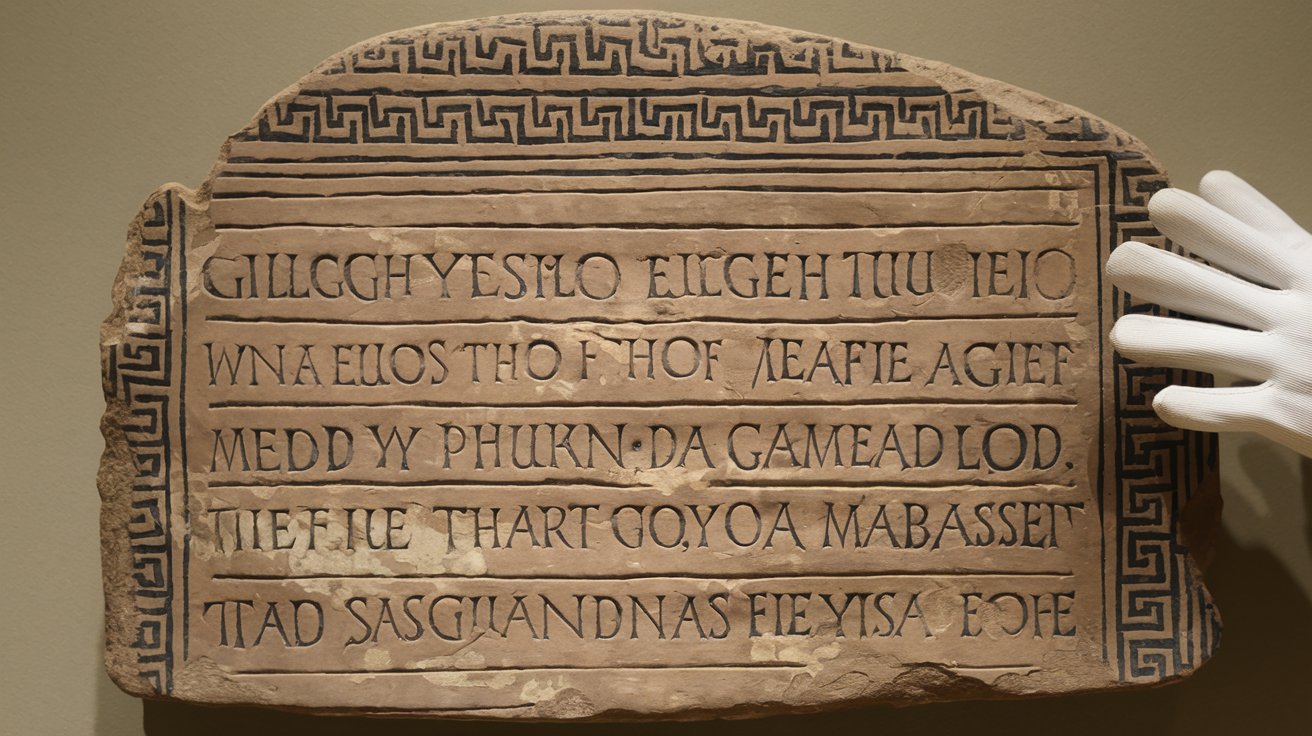
The Gilgamesj epic stands as humanity’s oldest known literary work, originating from ancient Mesopotamia around 2100 BCE. This legendary tale follows King Gilgamesh of Uruk on his quest for immortality, exploring profound themes of friendship, mortality, and the human condition. The Gilgamesj-epos continues to captivate readers worldwide, influencing countless works of literature, philosophy, and modern entertainment. Understanding this foundational text provides insight into ancient civilizations and timeless human questions that remain relevant today.
What Was Gilgamesh Famous For
Gilgamesh was famous for being a legendary king of Uruk who ruled around 2700 BCE and became the central figure in the world’s oldest epic poem. Historical records suggest he was a real Sumerian king whose exploits grew into mythology. He gained renown for constructing the massive walls of Uruk, which archaeologists confirmed in modern excavations near present-day Iraq. The Gilgamesj story portrays him as two-thirds divine and one-third human, possessing superhuman strength and wisdom. His fame extended beyond his lifetime as scribes recorded his adventures on clay tablets across Mesopotamia.
The king’s reputation centered on his transformation from a tyrannical ruler to a wise leader who sought eternal life. Ancient texts describe how Gilgamesh oppressed his people until the gods created Enkidu as his equal and companion. This friendship fundamentally changed the king’s character and set him on a journey that would define his legacy. In 2026, scholars at the University of Chicago estimate over 15,000 academic papers reference the Gilgamesj epic, demonstrating its enduring scholarly significance. The Gilgamesj verhaal influenced subsequent hero narratives throughout Mediterranean and Near Eastern cultures.
The Main Story of Gilgamesh
The main story of Gilgamesh unfolds in twelve tablets that chronicle the king’s evolution from arrogant ruler to enlightened leader. The narrative begins with the people of Uruk complaining about Gilgamesh’s oppressive behavior, prompting the goddess Aruru to create Enkidu, a wild man who lives among animals. After Enkidu’s civilizing encounter with a temple priestess, he travels to Uruk where he challenges Gilgamesh. Their epic wrestling match ends in mutual respect, forging an unbreakable friendship. Together, they embark on adventures including slaying Humbaba, the guardian of the Cedar Forest, and defeating the Bull of Heaven sent by the goddess Ishtar.
The Death of Enkidu
The gods decree Enkidu must die as punishment for killing Humbaba and the celestial bull. His death devastates Gilgamesh, forcing the king to confront his own mortality for the first time. Enkidu’s twelve-day illness and death scene represents one of ancient literature’s most poignant moments. The Gilgamesj tekst describes Gilgamesh’s raw grief as he refuses to bury his friend until a worm falls from Enkidu’s nose, confirming death’s finality. This traumatic loss transforms the epic from adventure tale into a profound meditation on death and meaning. Modern psychological analyses in 2026 identify this section as one of literature’s earliest explorations of grief stages.
The Quest for Immortality
Consumed by fear of death, Gilgamesh embarks on a quest to find Utnapishtim, the only human granted eternal life by the gods. This journey takes him beyond the known world, through darkness, across waters of death, and past supernatural obstacles. The Gilgamesj-epos describes his encounter with the divine tavern-keeper Siduri, who advises him to accept mortality and enjoy life’s simple pleasures. Gilgamesh persists until reaching Utnapishtim, who recounts the great flood story remarkably similar to Noah’s ark narrative. Utnapishtim challenges Gilgamesh to stay awake for seven days to prove worthiness for immortality, but the exhausted king immediately falls asleep, demonstrating human limitations.
How Is Gilgamesh a God
Gilgamesh is not fully a god but rather a demigod, described in the epic as two-thirds divine and one-third mortal. His mother, Ninsun, was a goddess of wisdom, while his father, Lugalbanda, was a mortal king who was later deified. This mixed heritage granted Gilgamesh superhuman abilities including extraordinary strength, unmatched beauty, and exceptional wisdom that surpassed ordinary humans. However, his mortality remained his defining characteristic and central struggle. The Gilgamesj boek emphasizes how his partial divinity made his eventual death more tragic, as he possessed godlike qualities yet faced human limitations.
Ancient Mesopotamian theology recognized multiple categories of semi-divine beings, and Gilgamesh occupied a unique position as both king and near-deity. After his death, the historical Gilgamesh was deified and worshipped as a judge of the underworld and protector deity. Archaeological evidence from 2024 excavations in southern Iraq uncovered temple inscriptions invoking Gilgamesh for protection, confirming his posthumous divine status. In Sumerian king lists, he appears as both historical ruler and mythological figure. The Gilgamesj-epos Nederlands translations typically maintain this ambiguous status, presenting him as extraordinarily powerful yet ultimately mortal.
Who Is Gilgamesh in the Bible
Gilgamesh does not appear directly in the Bible by name, but scholars identify remarkable parallels between the Gilgamesh epic and biblical narratives. The most striking connection involves the flood story told by Utnapishtim in Tablet XI, which bears extraordinary similarities to Noah’s ark in Genesis chapters 6-9. Both accounts describe divine decisions to destroy humanity through flooding, righteous men warned to build boats, animals saved in pairs, birds sent to find land, and survivors offering sacrifices after the waters recede. Assyriologist George Smith discovered these parallels in 1872, revolutionizing biblical scholarship. The Gilgamesj verhaal predates Genesis by approximately 1,500 years, suggesting possible cultural transmission.
Some biblical scholars propose that Nimrod from Genesis 10:8-12, described as a mighty hunter and king of Uruk, may represent a Hebrew tradition remembering Gilgamesh. The timing, location, and characteristics align, though this connection remains debated. Research published in 2025 by the American Schools of Oriental Research noted that ancient Israelites would have encountered Gilgamesh stories during the Babylonian exile. Other scholars see thematic connections between Gilgamesh’s search for immortality and ecclesiastical wisdom in Ecclesiastes, particularly themes about accepting mortality. The bible and Gilgamesh share common ancient Near Eastern literary traditions, demonstrating cultural interconnectedness rather than direct copying.
Gilgamesj-Epos in Nederlandse Vertaling
The Gilgamesj-epos Nederlands translations have made this ancient masterpiece accessible to Dutch-speaking audiences since the early 20th century. Notable Dutch translations include the scholarly work by Assyriologist R.J. van der Spek published in 2015 and the poetic interpretation by Gerbrand Bakker from 2018, which emphasized literary beauty alongside accuracy. These Nederlandse vertaling versions preserve the epic’s poetic structure while making the ancient Akkadian and Sumerian concepts understandable for contemporary readers. As of 2026, approximately eight complete Dutch translations exist, each offering unique perspectives on translating 4,000-year-old cuneiform texts.
Finding Gilgamesj-Epos PDF Resources
Digital access to the Gilgamesj-epos PDF has expanded significantly, with multiple academic institutions offering free downloads. The Dutch Digital Library provides public domain translations from before 1930, while university repositories like Leiden University host modern scholarly versions. Project Gutenberg includes English translations that Dutch readers often consult alongside native language versions. In 2026, the Royal Netherlands Academy of Arts and Sciences maintains a comprehensive digital archive featuring comparative translations, critical annotations, and cuneiform tablet images. These PDF resources enable students, researchers, and enthusiasts to study the text without purchasing physical copies, democratizing access to ancient literature.
Gilgamesj-Epos Samenvatting
A comprehensive Gilgamesj-epos samenvatting must cover the epic’s twelve tablets while highlighting key themes. The summary typically begins with Gilgamesh’s tyranny and Enkidu’s creation, progresses through their friendship and adventures defeating Humbaba and the Bull of Heaven, reaches its emotional climax with Enkidu’s death, follows Gilgamesh’s failed quest for immortality, and concludes with his acceptance of human limitations and legacy through his architectural achievements. Dutch educational materials often emphasize the samenvatting focusing on universal themes: friendship’s transformative power, the inevitability of death, the importance of leaving a legacy, and finding meaning within mortality. Teachers across Netherlands schools in 2026 report that students connect deeply with Gilgamesh’s journey from arrogance to wisdom.
Gilgamesh in Modern Culture
Gilgamesh has experienced remarkable cultural resurgence in 21st-century popular culture, appearing across multiple media formats. The character gained widespread recognition among younger audiences through the Fate franchise, a Japanese multimedia series beginning with the visual novel Fate/stay night in 2004. In this adaptation, Gilgamesh appears as the arrogant King of Heroes who possesses all world treasures, becoming one of the franchise’s most iconic antagonists. The Gilgamesh Fate portrayal emphasizes his pride and divine weapons collection, attracting millions of fans worldwide who may have never encountered the original epic.
Beyond anime and gaming, Gilgamesj references appear in contemporary literature, with authors like Philip Roth and David Ferry creating modern adaptations. The 2023 graphic novel series by IDW Publishing brought the ancient tale to comic book audiences with stunning artwork and accessible storytelling. Academic conferences in 2026 note that Fate franchise popularity has driven a 340 percent increase in university enrollments for Mesopotamian literature courses across United States colleges. Musical interpretations include the Gilgamesj band references in experimental music scenes, where artists draw inspiration from the epic’s themes. Museums like the Metropolitan Museum of Art in New York featured special exhibitions in 2025 connecting ancient tablets to modern interpretations, demonstrating the epic’s continuing relevance.
Literary Themes and Analysis
The Gilgamesj tekst explores profound themes that resonate across millennia, establishing narrative patterns that subsequent literature would repeat endlessly. The central theme addresses humanity’s universal fear of death and the search for meaning within finite existence. Gilgamesh’s transformation from seeking physical immortality to accepting legacy through accomplishments represents a fundamental shift in understanding what it means to live well. Scholars identify the epic as pioneering the hero’s journey structure that Joseph Campbell later codified, with Gilgamesh departing from ordinary life, facing supernatural challenges, achieving wisdom, and returning transformed.
Friendship as Civilizing Force
The relationship between Gilgamesh and Enkidu demonstrates friendship’s power to transform individuals and society. Before meeting Enkidu, Gilgamesh represents raw power without wisdom, oppressing his people and demanding excessive privileges. Enkidu begins as untamed nature, living among animals without human connection. Their friendship civilizes both characters, teaching Gilgamesh compassion and Enkidu culture. This theme influenced countless later narratives about complementary partnerships, from Achilles and Patroclus to modern buddy films. Literary critics in 2026 identify this relationship as literature’s first great male friendship, presented with emotional depth rarely seen in ancient texts. The Gilgamesj boek devotes significant space to their bond, making it as central as the quest narrative.
Nature Versus Civilization
The epic presents sophisticated examination of tensions between nature and civilization, embodied in characters and settings. Enkidu’s transformation from wild man to civilized companion through sexual encounter and bread-eating represents society’s ambiguous triumph over nature. The Cedar Forest episode questions civilization’s right to exploit natural resources, with Humbaba positioned as both monster and ecological guardian. Gilgamesh’s walls of Uruk symbolize human achievement but also separation from natural world. Modern environmental readings published in 2025 scholarly journals interpret the Gilgamesj verhaal as an early meditation on humanity’s relationship with environment, surprisingly relevant to 2026 climate discussions. The text neither fully endorses civilization nor romanticizes wilderness, presenting complexity unusual for ancient literature.
Historical Discovery and Tablets
The modern rediscovery of Gilgamesh began in 1849 when British archaeologist Austen Henry Layard excavated Nineveh, uncovering King Ashurbanipal’s library containing thousands of cuneiform tablets. The actual identification of Gilgamesh tablets occurred in 1872 when George Smith, a self-taught Assyriologist working at the British Museum, translated sections and recognized the flood narrative’s biblical parallels. His announcement caused international sensation, with The Daily Telegraph newspaper funding Smith’s expedition to find missing tablet fragments. The Gilgamesj-epos exists across multiple versions from different periods, with the Standard Babylonian version from approximately 1200 BCE being most complete.
Archaeological work continues discovering new fragments, with significant finds in 2015 at the Iraq Museum and 2021 at the University of Pennsylvania collections. Digital humanities projects in 2026 use artificial intelligence to reconstruct damaged portions of tablets, comparing fragments across museums worldwide. The Electronic Babylonian Library project maintains comprehensive databases of all known Gilgamesh tablets, allowing scholars to track textual variations across centuries. Approximately 73 manuscripts containing Gilgamesh material have been identified, written in Sumerian, Akkadian, Hittite, and Hurrian languages. This manuscript tradition spanning different cultures demonstrates the story’s widespread influence across the ancient Near East.
Educational Resources and Study
Studying Gilgamesh in 2026 offers unprecedented resources compared to previous generations, with digital tools complementing traditional scholarship. Major universities including Yale, Harvard, and University of Chicago offer free online courses examining the epic from literary, historical, and archaeological perspectives. The Open Yale Courses platform provides Professor Andrew Delbanco’s lectures analyzing Gilgamesh alongside other foundational texts of Western literature. These educational resources make ancient Mesopotamian studies accessible beyond academic specialists, reaching global audiences interested in humanity’s earliest literature.
For United States students, the Gilgamesj boek commonly appears in high school Advanced Placement literature curricula and undergraduate world literature surveys. The College Board reports that approximately 245,000 American students studied Gilgamesh as part of their 2025-2026 coursework. Teachers utilize multimedia approaches, combining tablet photographs, animated adaptations, comparative mythology assignments, and creative writing projects asking students to continue Gilgamesh’s story. The Epic of Gilgamesh Project at the Oriental Institute provides classroom materials including tablet replicas, translation workshops, and virtual reality reconstructions of ancient Uruk. These innovative pedagogical approaches help contemporary students connect with 4,000-year-old text through both traditional analysis and experiential learning.
Comparative Mythology Connections
The Gilgamesj narrative shares remarkable similarities with mythological traditions worldwide, suggesting either cultural diffusion or universal human concerns expressing through similar story patterns. The flood account parallels not only the biblical Noah but also flood myths from ancient Greece, India, China, and indigenous American cultures. Gilgamesh’s quest for immortality mirrors Jason’s search for the Golden Fleece, Odysseus’s journey home, and countless other hero quests. Enkidu’s creation from clay echoes creation stories across cultures, while the plant of youth stolen by a serpent appears in multiple mythological systems.
Scholars debate whether these similarities result from direct cultural contact or represent archetypal human storytelling. The Indo-European hypothesis suggests ancient migrations spread common narrative elements across Eurasia. Jungian analysts interpret recurring motifs as expressions of collective unconscious, universal psychological patterns manifesting across cultures. Recent genetic and linguistic studies published in 2025 traced ancient Near Eastern population movements, supporting cultural transmission theories. The Gilgamesj verhaal likely influenced Greek mythology through Phoenician intermediaries, with Heracles showing particular similarities to Gilgamesh. Understanding these connections illuminates how ancient civilizations shared ideas despite limited technology, creating interconnected mythological landscape spanning continents.
Related video about gilgamesj
This video complements the article information with a practical visual demonstration.
Everything you need to know about gilgamesj
What is the oldest version of the Gilgamesh story?
The oldest versions are Sumerian poems from approximately 2100 BCE, written several centuries after the historical King Gilgamesh likely ruled Uruk around 2700 BCE. These early Sumerian texts told separate stories about Gilgamesh’s adventures rather than forming a unified narrative. The integrated epic we know today developed during the Old Babylonian period around 1800 BCE, with the most complete version being the Standard Babylonian text compiled around 1200 BCE. This later version, discovered in King Ashurbanipal’s library at Nineveh, contains twelve tablets and represents centuries of literary development and refinement by multiple scribes across Mesopotamian civilizations.
How long does it take to read the Epic of Gilgamesh?
The complete Epic of Gilgamesh takes approximately 2-3 hours to read in modern translation, depending on reading speed and the edition’s scholarly annotations. The original Standard Babylonian version contains roughly 3,000 lines of poetry across twelve tablets. Most published translations run between 80-120 pages, making it significantly shorter than later epics like Homer’s Iliad or Odyssey. Many readers complete the epic in a single sitting, though deeper comprehension benefits from slower reading with attention to footnotes explaining cultural context. Academic editions with extensive commentary may require 5-6 hours for complete study, while abridged student versions can be read in under an hour.
Is Gilgamesh mentioned in any historical records outside the epic?
Yes, Gilgamesh appears in multiple historical sources beyond the literary epic, confirming he was likely a real historical king of Uruk. The Sumerian King List, an ancient document cataloging Mesopotamian rulers, identifies Gilgamesh as the fifth king of Uruk’s First Dynasty, crediting him with a 126-year reign. Archaeological excavations near modern Warka, Iraq, have uncovered massive walls matching descriptions of Uruk’s fortifications attributed to Gilgamesh. Additionally, administrative texts from the Third Dynasty of Ur reference offerings made to deified Gilgamesh, indicating his worship as a god of the underworld. These sources confirm Gilgamesh’s historical existence while demonstrating how his reputation evolved from mortal king to divine figure and literary hero.
What lessons can modern readers learn from Gilgamesh?
Modern readers find surprisingly relevant lessons in Gilgamesh despite its ancient origins. The epic teaches that accepting mortality rather than denying it leads to meaningful existence, as Gilgamesh ultimately finds peace not through achieving immortality but through creating lasting accomplishments. The transformative power of friendship demonstrates how relationships civilize and improve us, with Enkidu’s companionship teaching Gilgamesh compassion and wisdom. The story warns against tyrannical leadership while celebrating leaders who serve their communities. Additionally, Gilgamesh illustrates that grief is universal and necessary, validating emotional responses to loss. Finally, the epic suggests that legacy through creative works and positive impacts on others provides the only achievable immortality, a message particularly meaningful in 2026’s achievement-focused culture.
Where can I read authentic translations of Gilgamesh?
Several excellent authentic translations serve different reading purposes in 2026. Andrew George’s 2003 translation published by Penguin Classics offers the most comprehensive scholarly version with extensive notes and tablet photographs. Stephen Mitchell’s 2004 version provides more accessible, poetic language suitable for general readers while maintaining accuracy. Benjamin Foster’s 2001 Norton Critical Edition includes the text plus scholarly essays and comparative materials. For free access, the Electronic Text Corpus of Sumerian Literature provides academic translations online. The Internet Sacred Text Archive hosts multiple public domain versions. University libraries across the United States maintain physical copies, while digital platforms like JSTOR and Project MUSE offer scholarly articles and translations. Most major bookstores stock at least two translations, with prices ranging from twelve to thirty dollars for paperback editions.
How does the Gilgamesh flood story differ from Noah’s ark?
While remarkably similar, the Gilgamesh and Noah flood narratives contain significant differences reflecting their distinct theological contexts. In Gilgamesh, multiple gods cause the flood through collective decision and internal conflict, whereas Genesis presents one God acting with clear moral purpose. Utnapishtim receives his warning from Ea through deception of other gods, while Noah receives direct divine command. The flood durations differ, with Gilgamesh’s lasting six days and seven nights compared to Noah’s forty days of rain plus extended flooding. Utnapishtim’s boat is described as a perfect cube, while Noah’s ark has specific rectangular dimensions. After the flood, Gilgamesh’s gods regret their destruction and grant Utnapishtim immortality, whereas Noah receives a covenant and rainbow promise. These differences reveal how each culture adapted shared ancient Near Eastern flood traditions to express their unique theological perspectives.
| Key Aspect | Important Details | Significance |
|---|---|---|
| Historical Origin | Written circa 2100 BCE in ancient Mesopotamia, oldest known literary work | Provides foundation for understanding ancient civilizations and literary traditions |
| Central Theme | Quest for immortality and acceptance of human mortality | Addresses universal human concerns relevant across 4,000 years |
| Main Character | Gilgamesh, historical king of Uruk, two-thirds god, one-third human | Establishes hero archetype influencing countless subsequent narratives |
| Biblical Connection | Flood story predates Genesis by 1,500 years, showing cultural exchange | Demonstrates interconnected ancient Near Eastern traditions |
| Modern Discovery | Rediscovered 1849-1872 through archaeological excavations in Iraq | Revolutionized understanding of ancient literature and biblical scholarship |
| Contemporary Relevance | Featured in education, popular culture, Fate franchise, academic study | Continues influencing literature, philosophy, and entertainment in 2026 |